1885 — 2026

The Saga of the
Motorcycle

140 years of freedom, thunder and mechanical passion

Scroll
0
Years of history
0
Bikes sold / year
0
Horsepower
0
km/h top speed

The Saga in 10 Acts

From a wooden-framed Reitwagen to the electric machines of the future, every era forged the soul of the motorcycle

Daimler Reitwagen 1885 — the very first motorcycle

1885 — 1910 · The Pioneers

When Wood Met Fire

In 1885, inside a workshop in Bad Cannstatt, Gottlieb Daimler bolted a small single-cylinder engine onto a wooden frame bound with iron. The Reitwagen — literally "riding car" — looked like nothing the world had ever seen. Its wheels were wooden, two small training wheels kept it upright, and its half-horsepower engine barely pushed it faster than a brisk walk. Yet this absurd contraption had just invented a future. By 1894, Hildebrand & Wolfmüller launched the world's first production motorcycle. The age of mechanical freedom had begun.

0.5 hp
Power
264 cc
Displacement
90 kg
Weight
12 km/h
Top speed
Combustion engine Wooden frame First production bike (1894)

Also in this era

Hildebrand & Wolfmüller
Hildebrand & Wolfmüller1894 · First production bike
BMW R32 1923 — the legendary flat-twin

1903 — 1930 · The Industrial Rise

Birth of the Giants

Milwaukee, 1903: in a backyard shed, William Harley and Arthur Davidson assembled their first single-cylinder engine. In Springfield, Indian had been leading the way since 1901. Across the Atlantic, BMW unveiled the R32 in 1923 with its legendary flat-twin — an architecture that would survive a century. The Tourist Trophy was born in 1907 on the Isle of Man, turning mountain roads into a cathedral of speed. The motorcycle was no longer a toy: it was an industry, a passion, and already a religion.

18 hp
Power
600 cc
Displacement
160 kg
Weight
95 km/h
Top speed
Harley-Davidson (1903) BMW flat-twin Tourist Trophy (1907) Chain drive

Also in this era

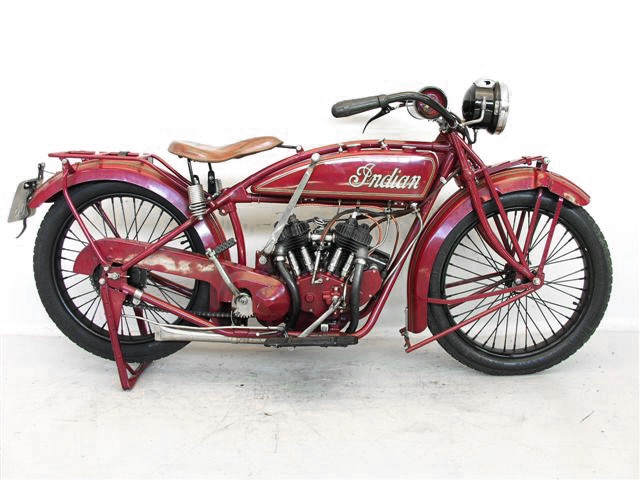
Indian Scout
Indian Scout1920 · 600cc V-twin
Brough Superior SS100
Brough Superior SS1001924 · "Rolls-Royce of bikes"
Harley-Davidson Sportster
Harley Sportster1957 · The first Sportster
Norton Dominator
Norton Dominator1949 · British parallel twin
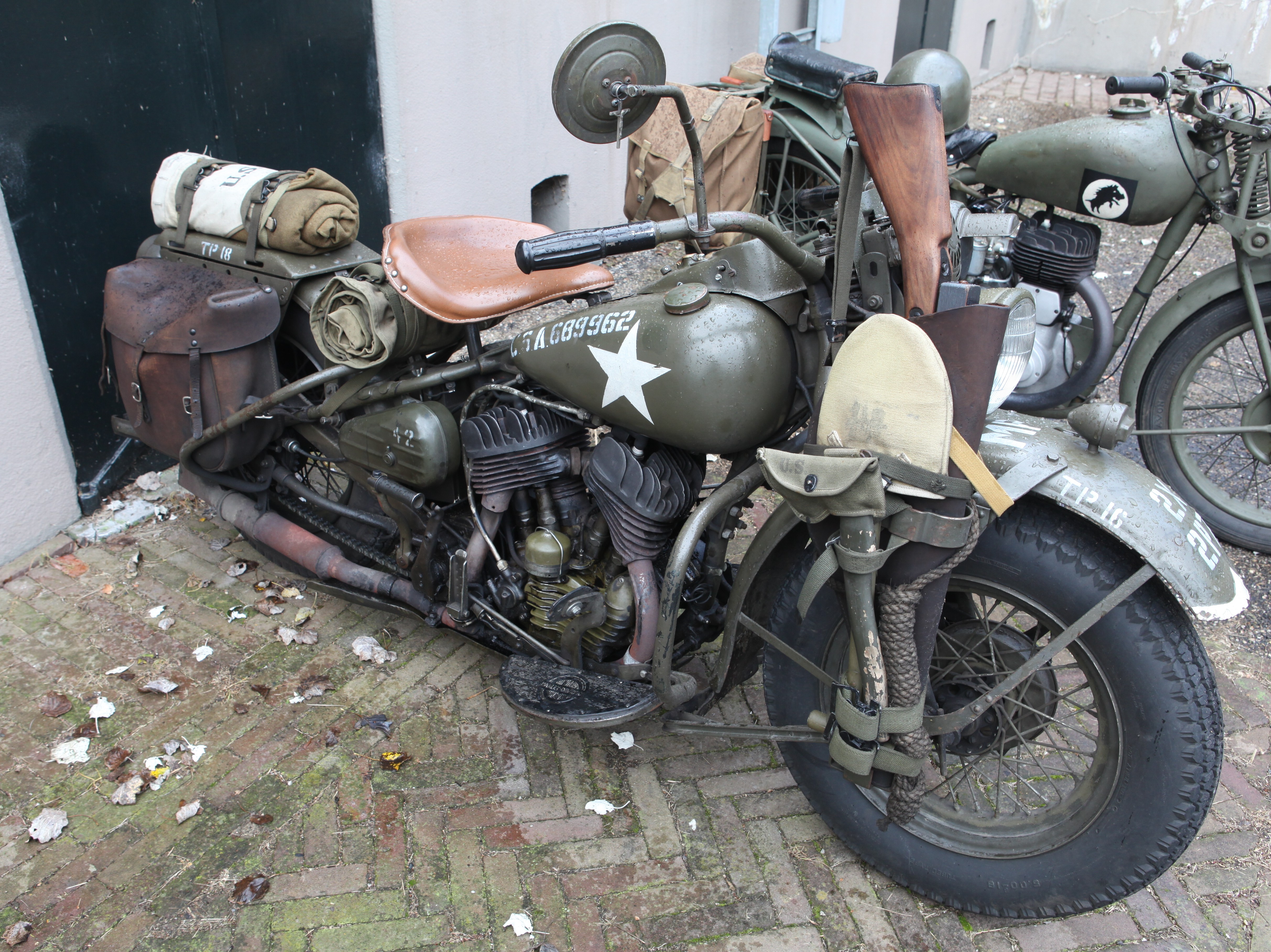
Harley-Davidson WLA — the Liberator of World War II

1939 — 1945 · Motorcycles at War

Steel Horses on the Frontline

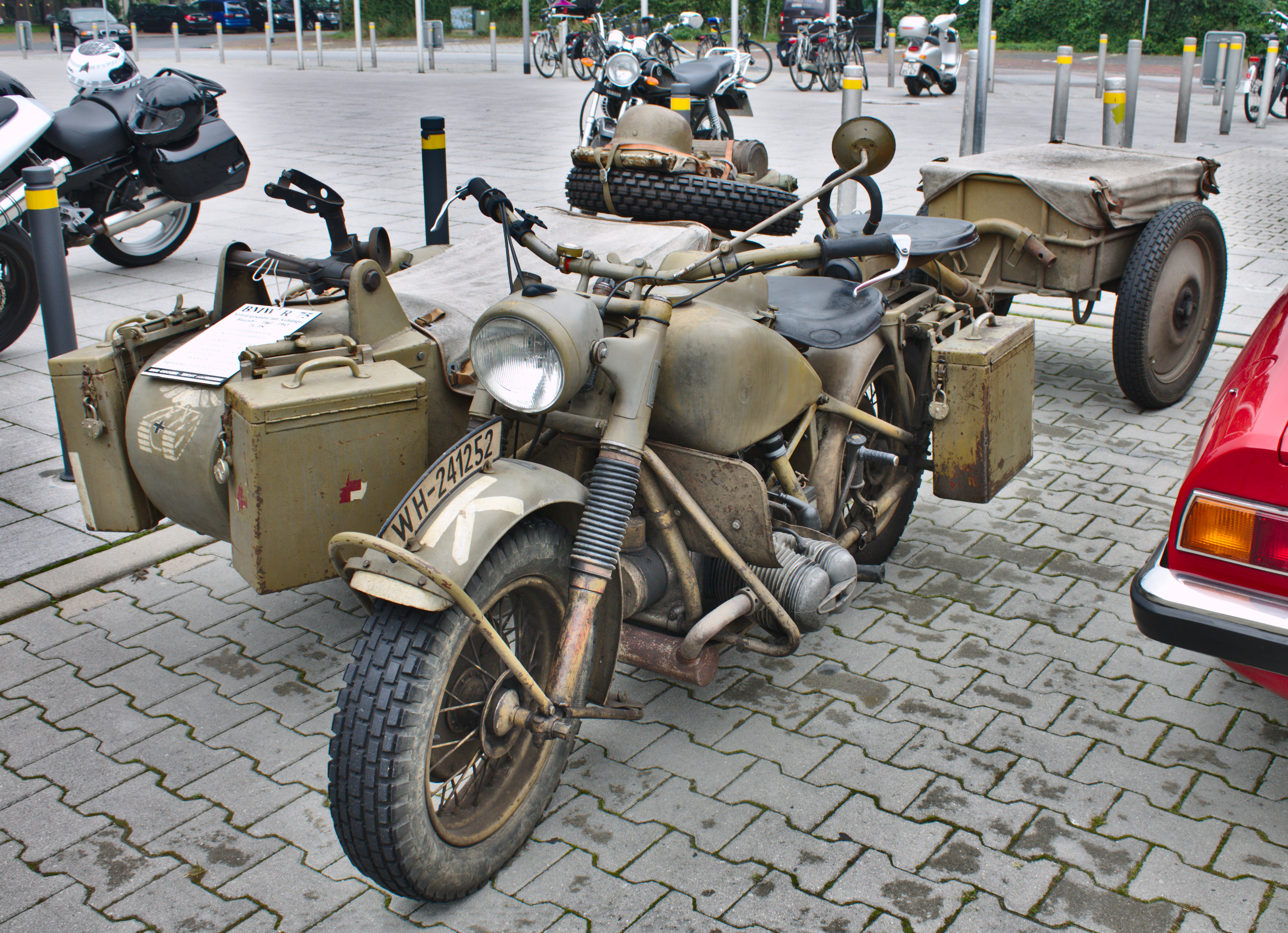
When the world caught fire, the motorcycle rode to war. The Harley-Davidson WLA, nicknamed "Liberator," plowed through the mud of Europe by the tens of thousands. The BMW R75, with its driven sidecar wheel, climbed where Jeeps got stuck. These military machines forged an entire generation of riders: millions of soldiers came home with motorcycling in their blood. The post-war era would be electric — figuratively speaking.

23 hp
Power
740 cc
Displacement
260 kg
Weight (sidecar)
100 km/h
Top speed
Military bikes Sidecars Mass production Reconnaissance

Also in this era

BMW R75 with sidecar
BMW R751940 · Driven sidecar wheel
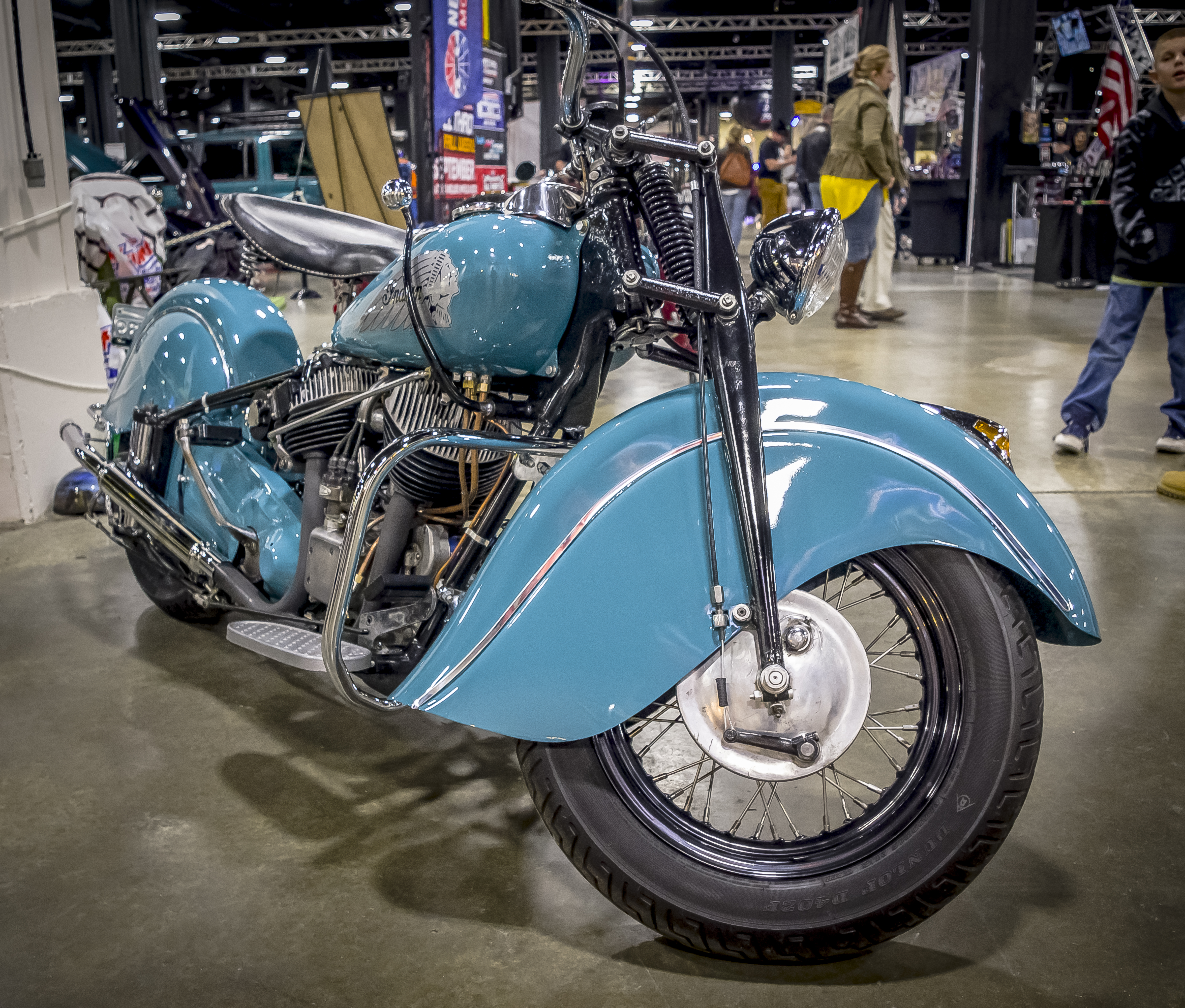
Indian Chief
Indian Chief1947 · Last of the big Indians
Triumph Bonneville T120 1959 — icon of rebellion

1947 — 1965 · The Golden Age & Rebellion

Sound and Fury

1953: Marlon Brando straddles a Triumph Thunderbird in The Wild One. "What are you rebelling against?" — "Whaddya got?" The motorcycle became the vehicle of counterculture. In England, café racers tore from pub to pub on stripped-down Triumphs, Nortons and BSAs. The Bonneville T120, born in 1959, took its name from Johnny Allen's speed record at the Bonneville Salt Flats. Meanwhile, Vespa and Lambretta brought two wheels to the masses across Europe. The road was calling, and a whole generation answered.

46 hp
Power
650 cc
Displacement
180 kg
Weight
175 km/h
Top speed
Biker culture Café racers Vespa & Lambretta Counterculture

Also in this era

Vincent Black Shadow
Vincent Black Shadow1948 · 125 mph, fastest of its era
Norton Manx
Norton Manx1950s · The racer's racer
BSA Gold Star
BSA Gold Star1956 · The café racer icon
Moto Guzzi V7
Moto Guzzi V71965 · Italian transverse V-twin
Harley Electra Glide
Harley Electra Glide1965 · King of touring
Honda CB750 Four 1969 — the first superbike

1969 — 1975 · The Japanese Invasion

Four Cylinders, Zero Mercy

1969: Honda unveiled the CB750 Four at the Tokyo Motor Show. Inline four-cylinder, front disc brake, electric starter — the world had never seen anything like it on a production bike. The press coined the word "superbike." Within three years, Kawasaki struck back with the even more powerful Z1/900. The "Big Four" — Honda, Yamaha, Suzuki, Kawasaki — flooded the market. The British industry, resting on its laurels, collapsed. Japanese reliability had changed the rules of the game forever.

67 hp
Power
736 cc
Displacement
218 kg
Weight
200 km/h
Top speed
First superbike Inline four Disc brake The Big Four

Also in this era

Kawasaki Z1 900
Kawasaki Z1/9001972 · Even more powerful
Kawasaki H2 750 Mach IV
Kawasaki H2 Mach IV1972 · The "Widowmaker"
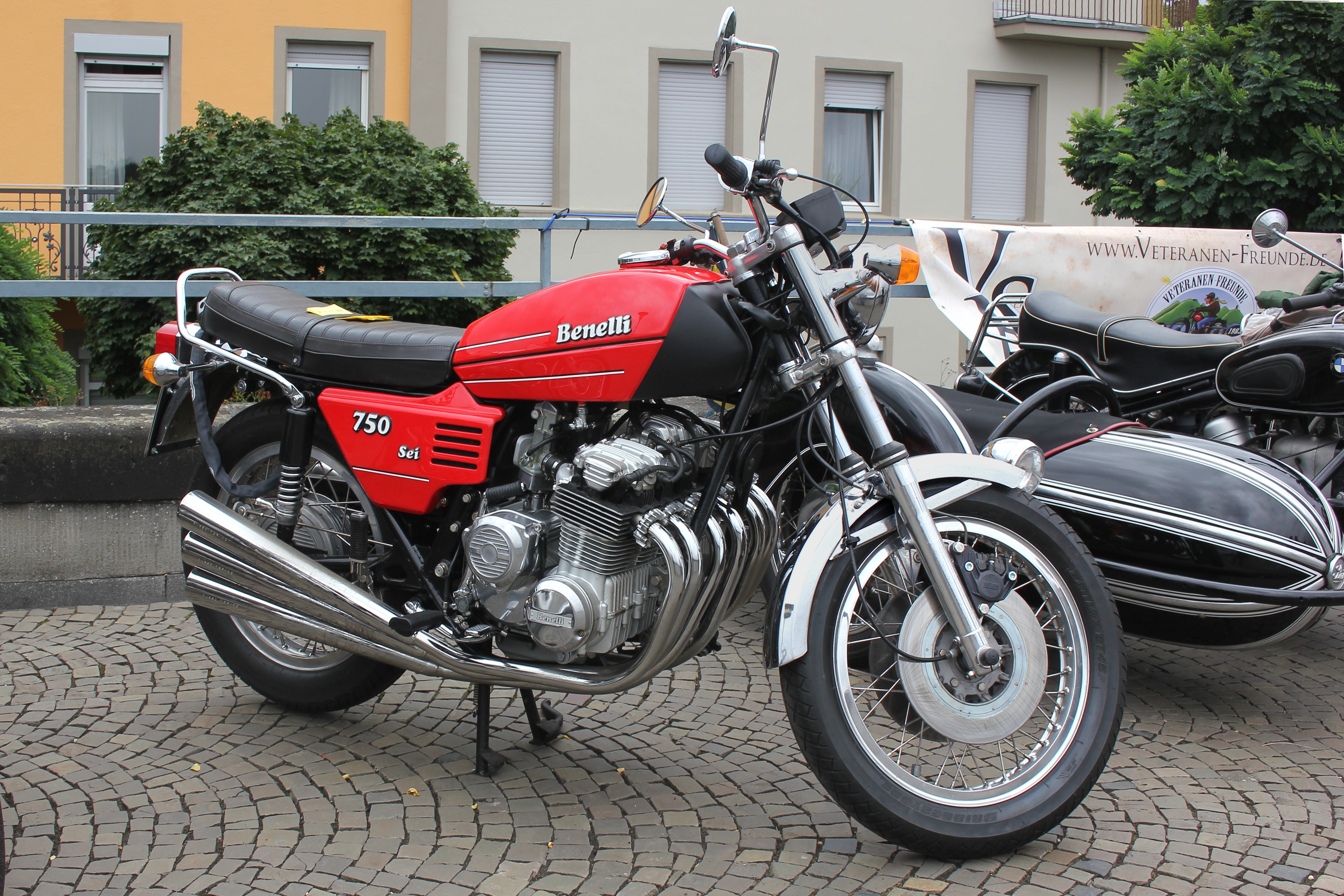
Benelli 750 Sei
Benelli 750 Sei1972 · First production six
Suzuki GT750
Suzuki GT7501971 · "The Water Buffalo"
BMW R90S
BMW R90S1973 · First superbike from Munich
BMW R80 G/S 1980 — birth of the adventure bike

1976 — 1985 · Adventure & Rally

The Road Never Ends

1979, the desert. 182 adventurers set off from Paris towards Dakar on machines never designed for it. Cyril Neveu, riding a Yamaha XT500, crossed the finish line first — only 74 competitors would follow. The Paris-Dakar rally invented a new mythology: that of the lone rider against the elements. BMW answered in 1980 with the R80 G/S, the first true adventure motorcycle. The dual-sport was born, and with it, the promise that the road never has to end at the tarmac.

32 hp
Power
500 cc
Displacement
140 kg
Weight
150 km/h
Top speed
Paris-Dakar (1979) Birth of adventure bikes Enduro Long-distance touring

Also in this era

Yamaha XT500
Yamaha XT5001976 · Won the first Dakar
Yamaha RD350
Yamaha RD3501973 · Two-stroke pocket rocket
Husqvarna 256A
Husqvarna 256A1970s · Swedish motocross king
Moto Guzzi Le Mans
Moto Guzzi Le Mans1976 · Italian cafe racer perfection
Ducati 916 1994 — the most beautiful motorcycle ever

1985 — 1999 · The Superbike Era

Beauty, Speed, Perfection

1985: Suzuki unleashed the GSX-R750 — aluminum frame, full fairing, racing posture. The race bike was finally within reach of mere mortals. In 1992, Honda fired back with the CBR900RR Fireblade — liter-bike power in a 600-class chassis. But the masterpiece arrived in 1994: the Ducati 916, penned by Massimo Tamburini, was instantly crowned "the most beautiful motorcycle in the world." Its L-twin, underseat exhausts and taut lines defined an entire era. The World Superbike Championship exploded.

150 hp
Power
916 cc
Displacement
198 kg
Weight
270 km/h
Top speed
Aluminum frames Full fairings WSBK Aerodynamics

Also in this era

Suzuki GSX-R750
Suzuki GSX-R7501985 · Started the superbike era
Honda CBR900RR Fireblade
Honda CBR900RR Fireblade1992 · Liter power, 600 weight
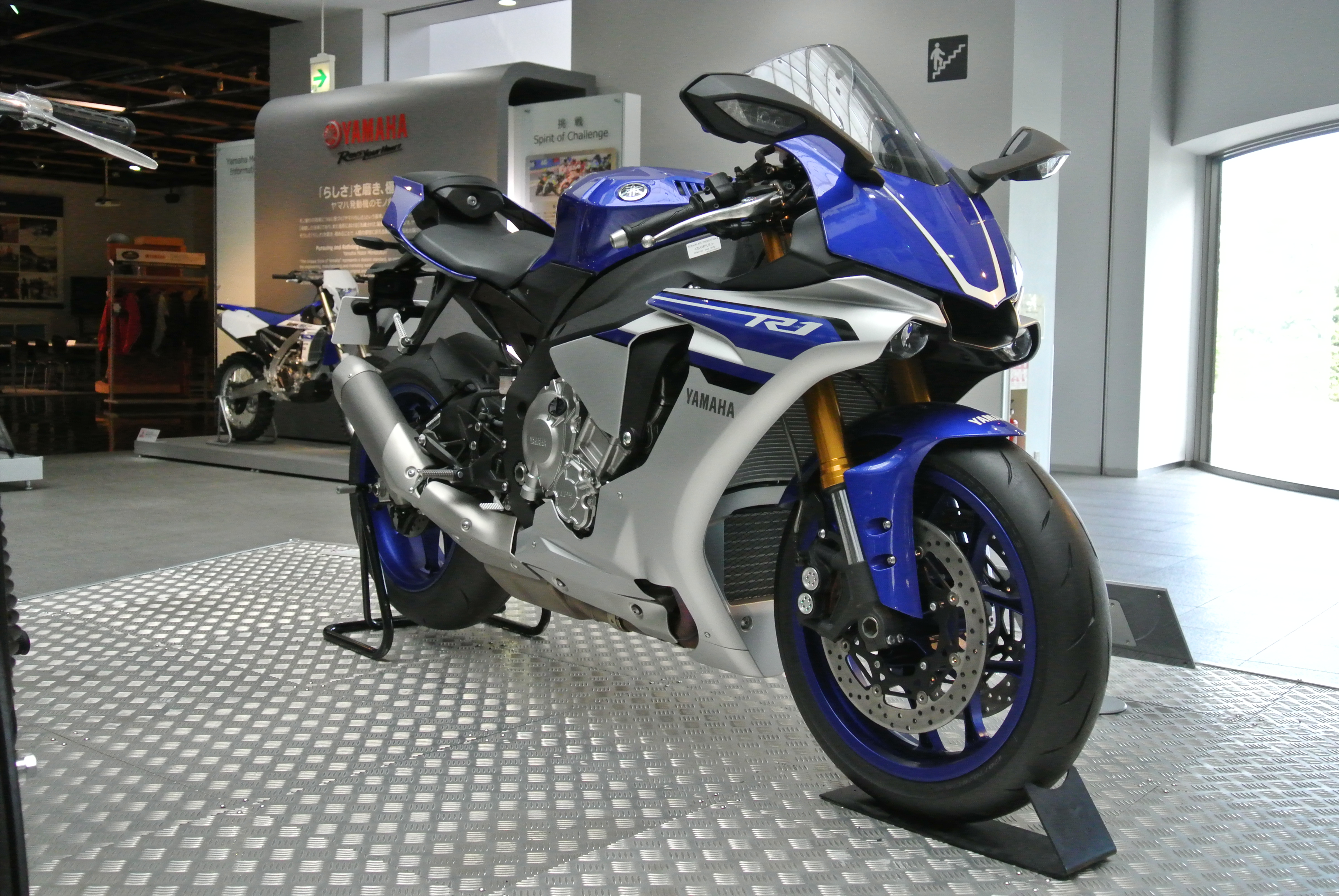
Yamaha YZF-R1
Yamaha YZF-R11998 · Rewrote the rulebook
Kawasaki GPZ900R
Kawasaki GPZ900R1984 · The Top Gun bike
Honda VFR750R RC30
Honda RC301987 · Homologation legend
Suzuki Katana GSX1100S
Suzuki Katana1981 · Hans Muth's masterpiece
Laverda 750 SFC
Laverda 750 SFC1971 · Italian endurance racer
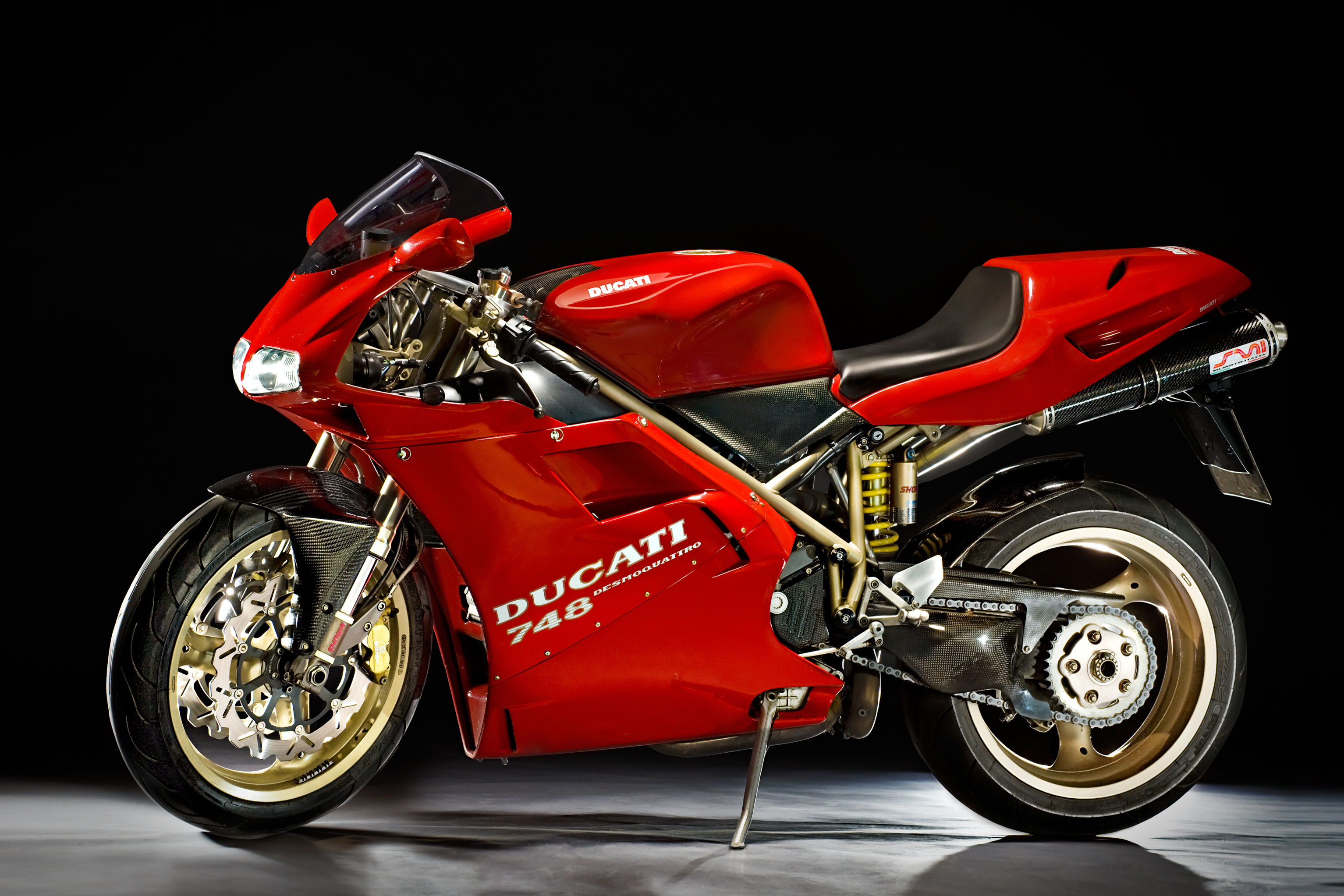
Ducati 748
Ducati 7481995 · The 916's little sister
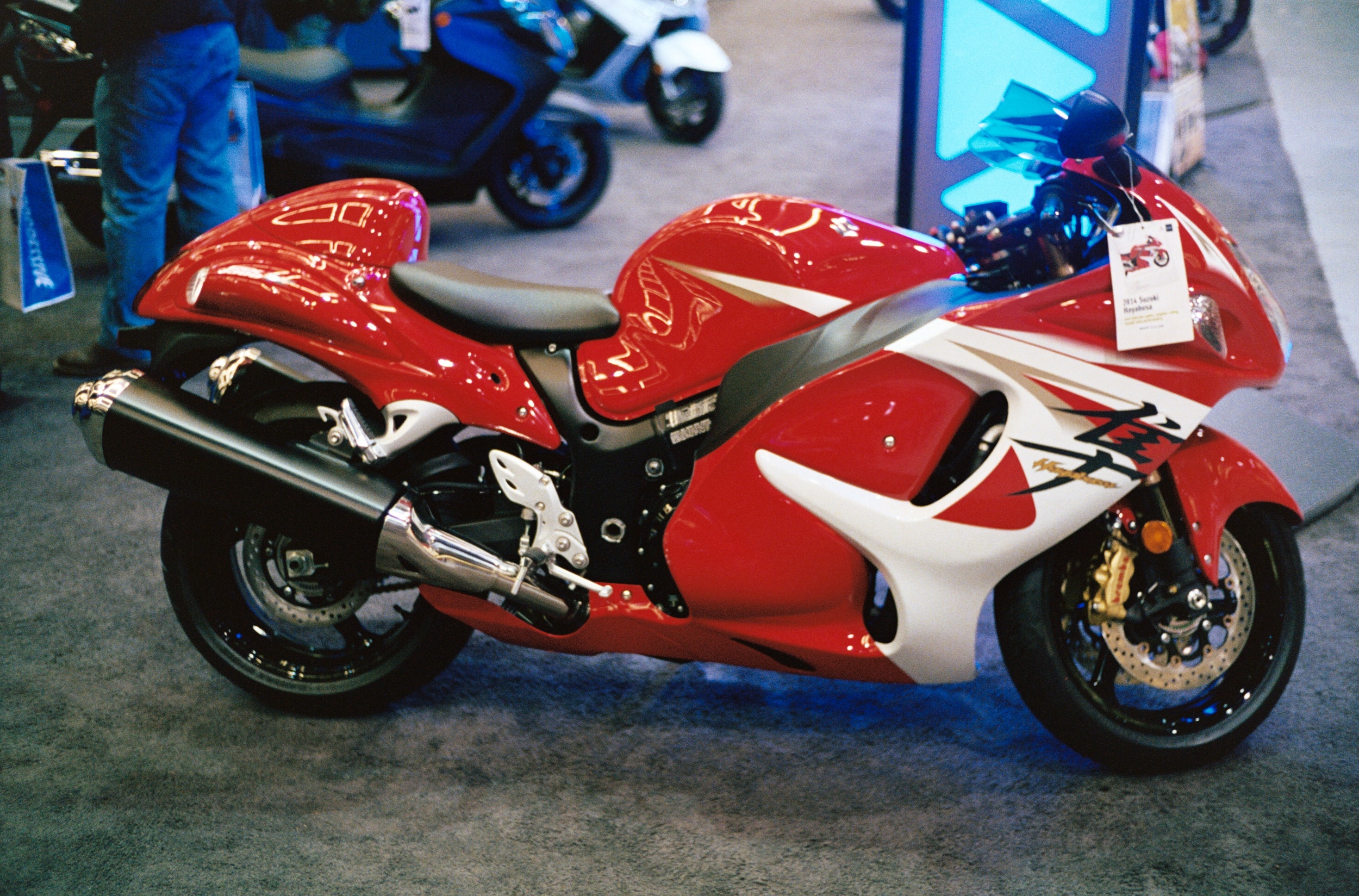
Suzuki Hayabusa — the 300 km/h queen

2000 — 2012 · The New Millennium

The Motorcycle Gets Smart

1999: the Suzuki Hayabusa broke the 300 km/h barrier straight from the factory, triggering an arms race that terrified governments. A gentleman's agreement capped speedometers at 299 km/h. Meanwhile, Miguel Galluzzi's Ducati Monster reinvented the naked roadster. BMW launched the R1200GS in 2004, and the adventure-touring segment became king. Onboard electronics exploded: ABS, traction control — the motorcycle ceased being pure mechanics and became a computer on two wheels.

175 hp
Power
1,299 cc
Displacement
215 kg
Weight
312 km/h
Top speed
Hypersport 300+ km/h Naked sport Adventure-touring golden age ABS & Traction control

Also in this era

BMW R1200GS
BMW R1200GS2004 · King of adventure
Ducati Monster
Ducati Monster1993 · Invented the naked sport
Honda Africa Twin
Honda Africa Twin1988 · Dakar-bred legend
Kawasaki ZZR1100
Kawasaki ZZR11001990 · Fastest bike in the world
Yamaha VMAX
Yamaha V-Max1985 · The original muscle bike
Honda CX500 Turbo
Honda CX500 Turbo1982 · First turbo production bike
BMW K1
BMW K11988 · Aero pioneer from Munich
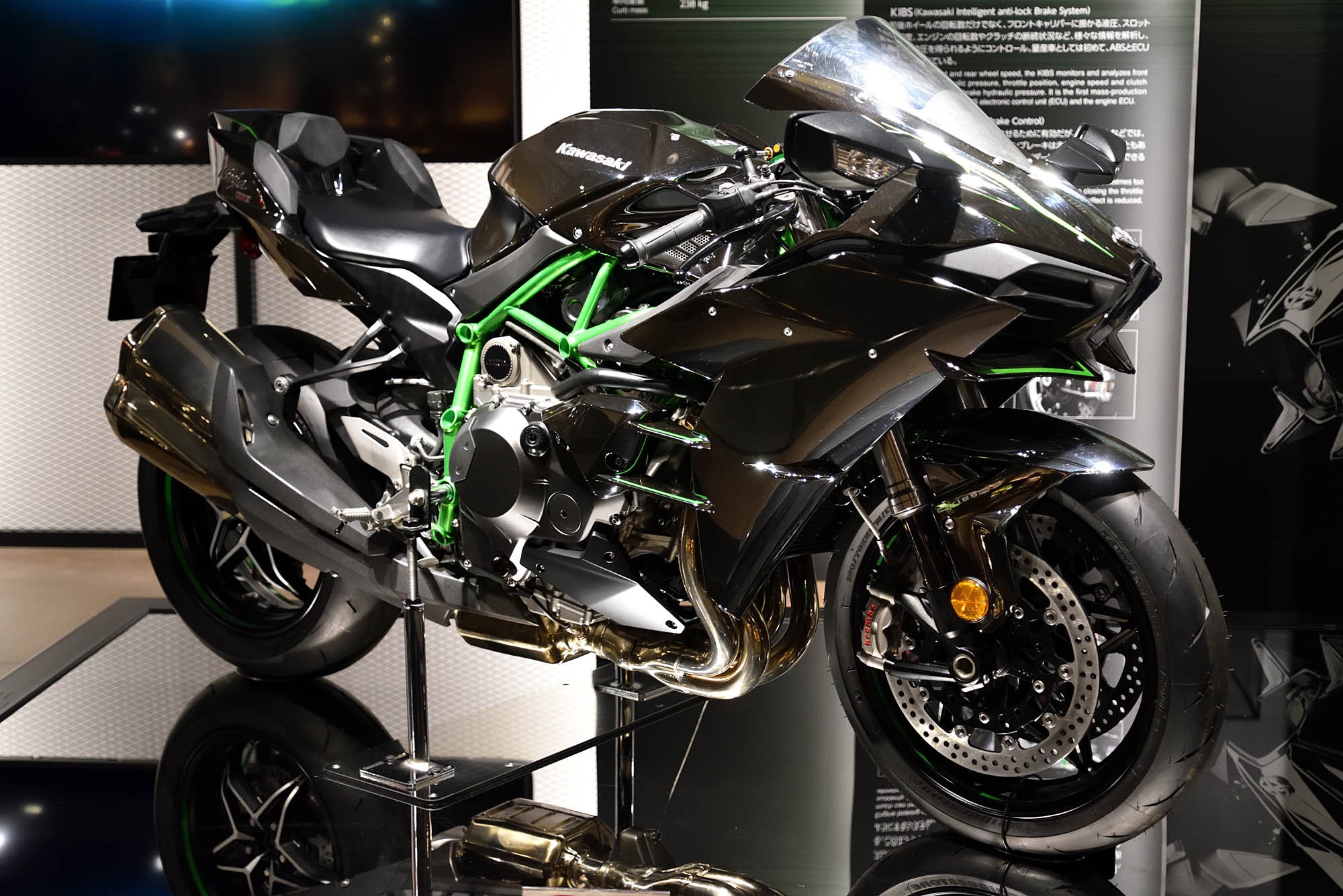
Kawasaki Ninja H2 — the factory supercharger

2013 — 2022 · The Electronic Era

Technology in Service of the Thrill

2015: Kawasaki dared the unthinkable — a supercharger on the Ninja H2. 310 horsepower in the R version, a turbo whoosh with every twist of the throttle. The Ducati Panigale V4 pushed the limits with 214 hp and MotoGP-derived winglets. Suspensions went semi-active, ABS learned to handle corners, dashboards became TFT screens connected to smartphones. The modern motorcycle is a concentrate of aerospace technology — but the thrill remains visceral and analog.

214 hp
Power
998 cc
Displacement
195 kg
Weight
330 km/h
Top speed
Supercharger (H2) Quickshifter Semi-active suspension Aero winglets

Also in this era

Ducati Panigale V4
Ducati Panigale V42018 · 214 hp V4 superbike
BMW S1000RR
BMW S1000RR2009 · German precision missile
KTM 1290 Super Duke R
KTM 1290 Super Duke R2013 · "The Beast"
Yamaha MT-09
Yamaha MT-092013 · Dark side of Japan
MV Agusta Brutale
MV Agusta Brutale2001 · Naked Italian fury
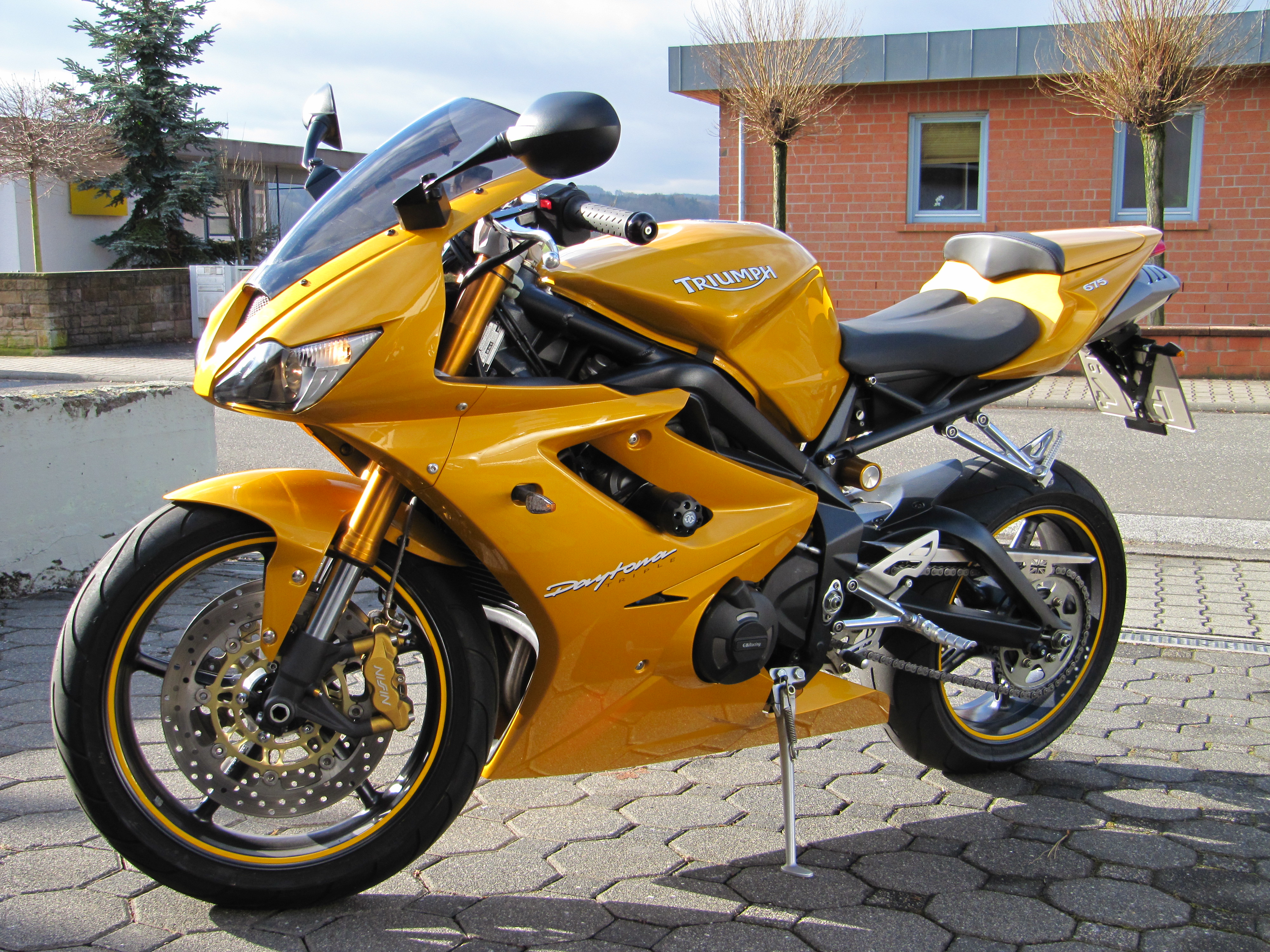
Triumph Daytona 675
Triumph Daytona 6752006 · Triple supersport
Triumph Street Triple
Triumph Street Triple2007 · Best middleweight naked
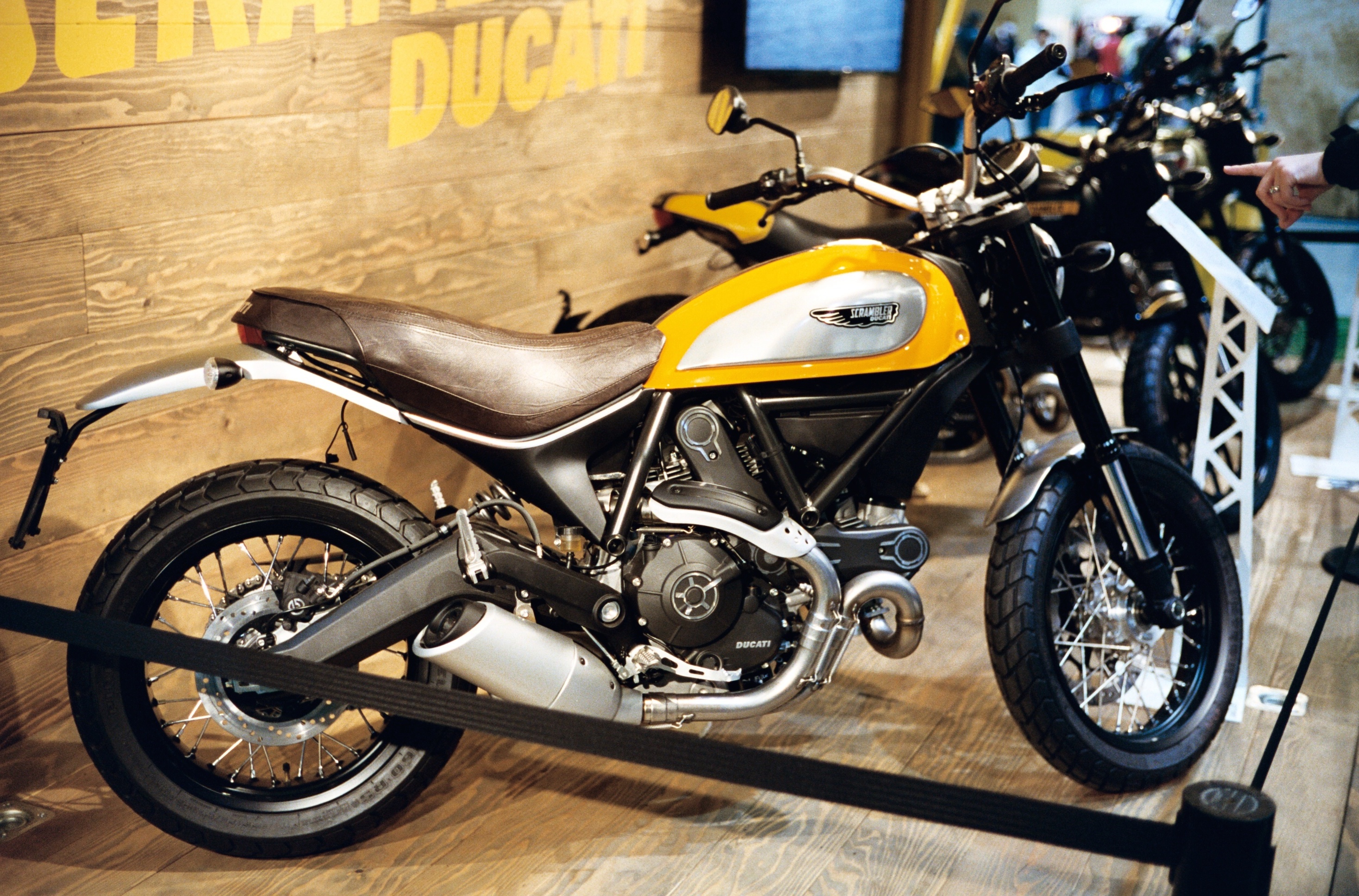
Ducati Scrambler
Ducati Scrambler2015 · Land of Joy
Energica Ego — the all-electric superbike

2023 — 2026 · The Electric & AI Future

Silence Is the New Roar

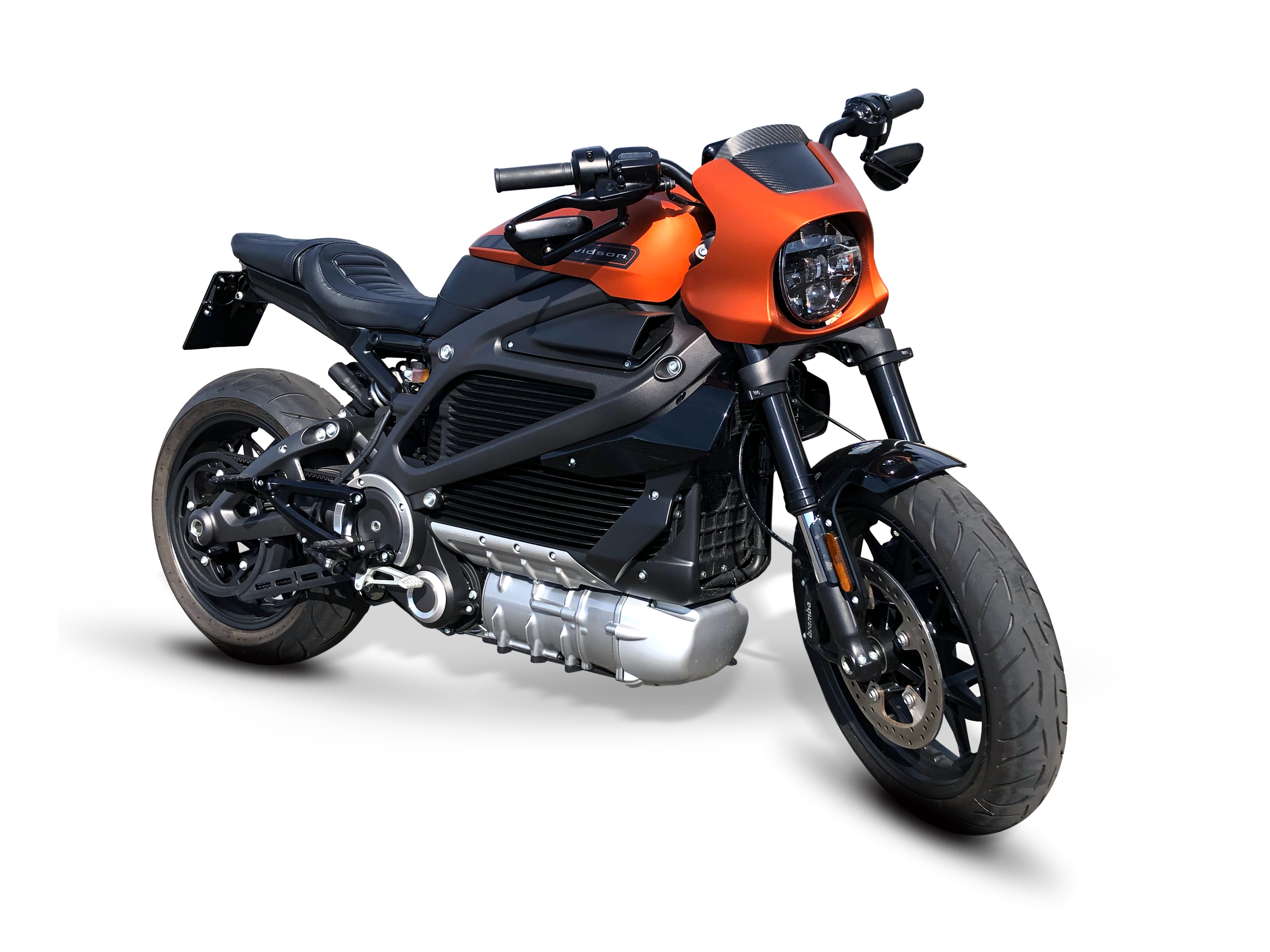
Silence is the new roar. Energica, LiveWire (born from Harley-Davidson), and Ducati with its V21L MotoE racer are rewriting the very DNA of the motorcycle. In 2021, Max Biaggi shattered the electric speed record at 408 km/h on a Voxan Wattman. Adaptive radar, onboard AI and connectivity are transforming every ride. Kawasaki is even exploring hydrogen. The motorcycle of the future makes no noise, but it still makes your heart race at 200 beats per minute.

150 hp
Power (elec.)
0 cc
Displacement
260 kg
Weight
280 km/h
Top speed
100% Electric 408 km/h record Onboard AI MotoE Championship Hydrogen R&D

Also in this era

LiveWire One
LiveWire OneHarley goes electric
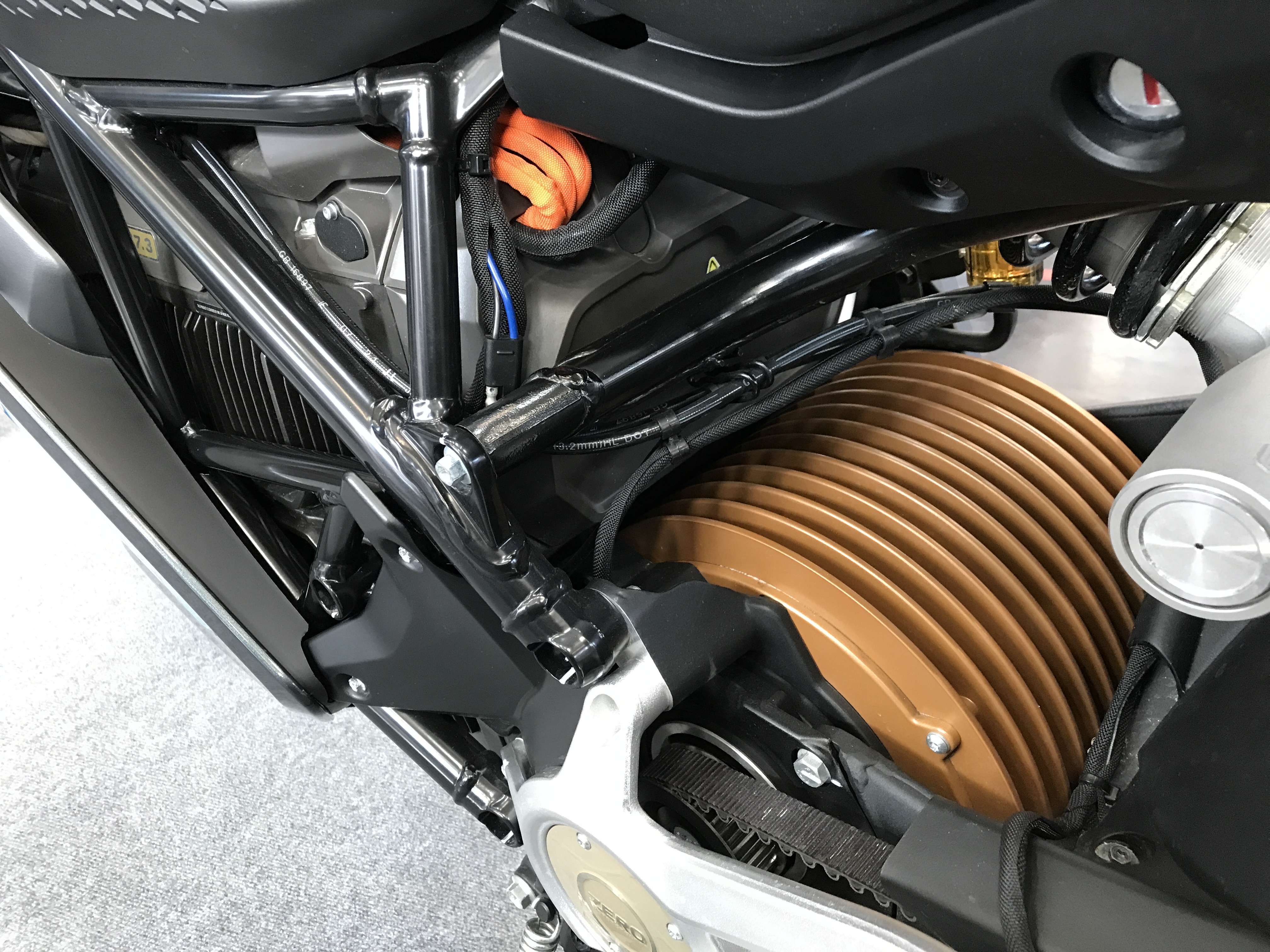
Zero SR/F
Zero SR/FCalifornia's electric pioneer

Small Engines, Big Stories

From post-war clip-on motors to electric scooters, the 50cc shaped generations of riders across the globe

1940s — 1950s

Post-War Pioneers

Garelli Mosquito

1946 · Italy

Garelli Mosquito

A tiny engine you bolted to your bicycle. The Mosquito motorized post-war Italy on the cheap — over 2 million clip-on kits were sold. It buzzed like its namesake and gave a nation its first taste of motorized freedom.

Clip-on engine
VeloSolex

1946 · France

VeloSolex

A bicycle with a tiny roller-drive engine perched over the front wheel. The VeloSolex put post-war France on two wheels — 8 million units sold, from factory workers to Brigitte Bardot. The simplest idea is often the most brilliant.

Motorized bicycle
Motobécane Mobylette

1949 · France

Motobécane Mobylette

The word "Mobylette" became synonymous with moped across the French-speaking world. Variator transmission, bulletproof 49cc engine — it carried an entire country to work for four decades. Over 14 million were built.

Moped
Honda Super Cub C50

1958 · Japan

Honda Super Cub

The most produced motor vehicle in history — over 100 million built. Honda's "You meet the nicest people on a Honda" campaign turned the Super Cub into a global icon. Cheap, reliable, and virtually indestructible, it motorized the developing world.

Step-through motorcycle

1960s

Freedom at Fourteen

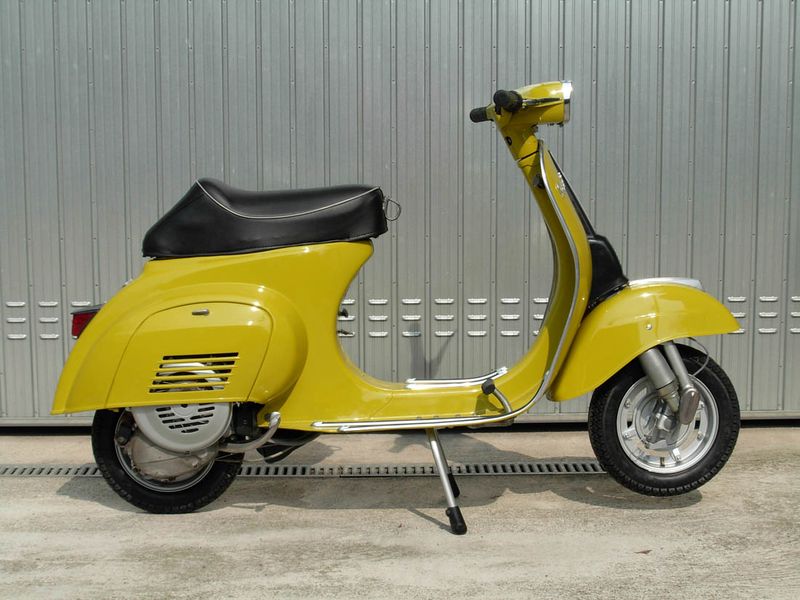
Vespa 50 Special

1969 · Italy

Vespa 50 Special

The little Vespa that defined la dolce vita for teenagers. Sleek, elegant and just 50cc — small enough to ride without a full license in most of Europe. Its chrome and curves made it an instant design icon that still turns heads today.

Scooter
Piaggio Ciao

1967 · Italy

Piaggio Ciao

Italy's answer to the moped: light, beautiful, and effortlessly cool. The Ciao became the first two-wheeler for millions of Italian teenagers. With its pedals and unforgettable silhouette, it was freedom distilled into its simplest form.

Moped
Honda Monkey Z50

1967 · Japan

Honda Monkey Z50

Originally built for a Japanese amusement park, the Monkey became a global cult classic. Tiny wheels, a folding frame, and an absurd amount of charm. It proved that motorcycling doesn't need to be serious to be utterly addictive.

Mini bike
Puch Maxi

1968 · Austria

Puch Maxi

Austria's gift to the moped world. The Puch Maxi conquered Northern Europe with its single-speed automatic and indestructible engine. Decades later, it's a cult classic, lovingly restored and traded by collectors everywhere.

Moped
Honda Dax ST50

1969 · Japan

Honda Dax ST50

The T-bone frame, the fat tank, the go-anywhere attitude. The Dax was Honda's fun machine — compact enough to fit in a car trunk, tough enough to tackle dirt roads. Recently reborn as a 125cc, proving great design is forever.

Mini bike

1970s

The Moped Golden Age

Yamaha FS1

1970 · Japan

Yamaha FS1 "Fizzy"

The first real 50cc with gears and attitude. The "Fizzy" gave teenagers a taste of real motorcycling — a 5-speed gearbox, a rev-happy two-stroke, and the unmistakable smell of premix fuel. It turned boys into riders overnight.

Geared motorcycle
Peugeot 103

1971 · France

Peugeot 103

The undisputed king of French mopeds. With its variator and endless tuning options, the 103 became the canvas for a whole generation. De-restricted, polished and lowered — it was the birth of 50cc culture for millions of teenagers.
Moped
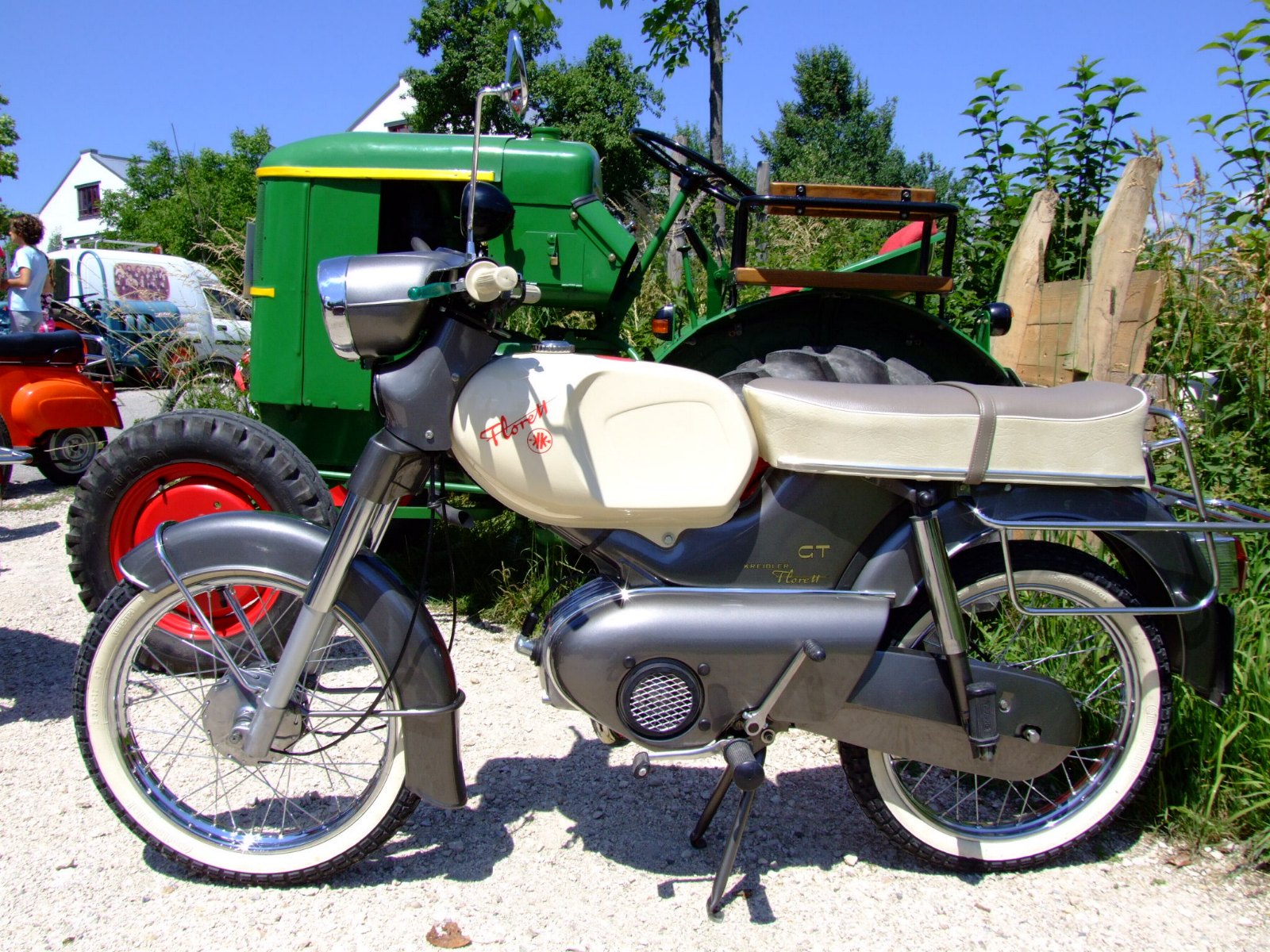
Kreidler Florett

1957–1982 · Germany

Kreidler Florett

German engineering in 50cc form. The Florett dominated 50cc Grand Prix racing, winning 10 world championships. On the street, it was the precision-built alternative to Italian flair — every component engineered to last.

Geared motorcycle
Zündapp KS50

1970s · Germany

Zündapp KS 50

Zündapp brought motorcycle-grade engineering to the 50cc class. The KS 50, with its five-speed gearbox and sporty stance, was the weapon of choice for German teenagers who wanted more than a moped but couldn't yet ride a big bike.

Geared motorcycle
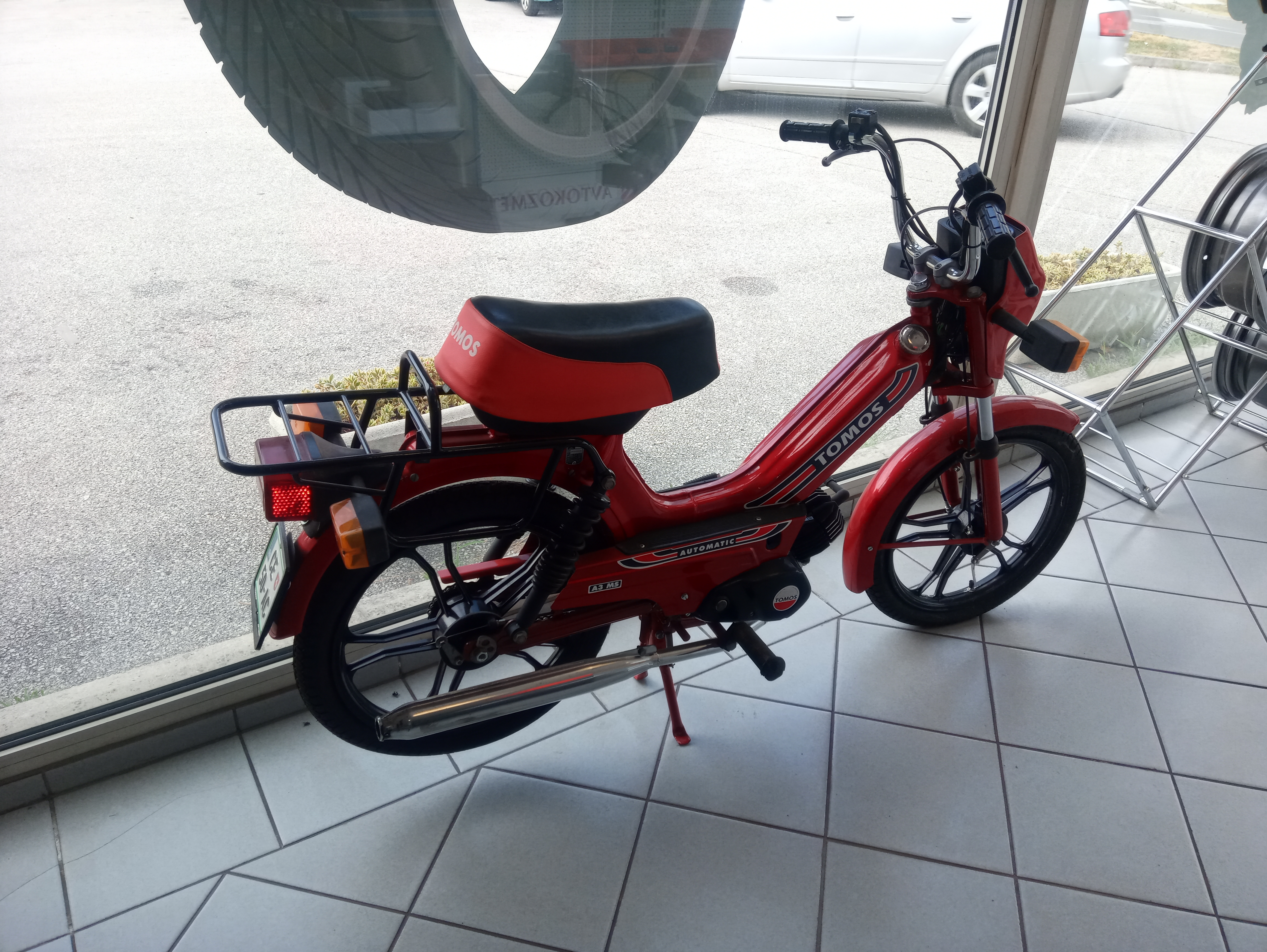
Tomos A3

1970s · Slovenia

Tomos A3

The workhorse of Eastern Europe. The Slovenian-made Tomos was exported worldwide, beloved for its simplicity and reliability. In the Netherlands, it rivaled Puch as the moped of choice. A blue-collar hero that just wouldn't quit.

Moped
Honda Camino

1976 · Japan

Honda Camino

Honda's step-through moped for the European market. The Camino brought Japanese reliability to the moped wars, with an automatic transmission and a quiet four-stroke-like smoothness. The sensible choice — but still surprisingly fun.

Moped

1980s

Tuning Culture Explodes

MBK 51

1980 · France

MBK 51

The tuner's ultimate canvas. Born from the Motobécane lineage, the MBK 51 spawned an entire underground culture of kits, exhausts and cylinder swaps. Garage-built monsters hitting 100 km/h on a moped frame — pure teenage rebellion, French-style.

Moped
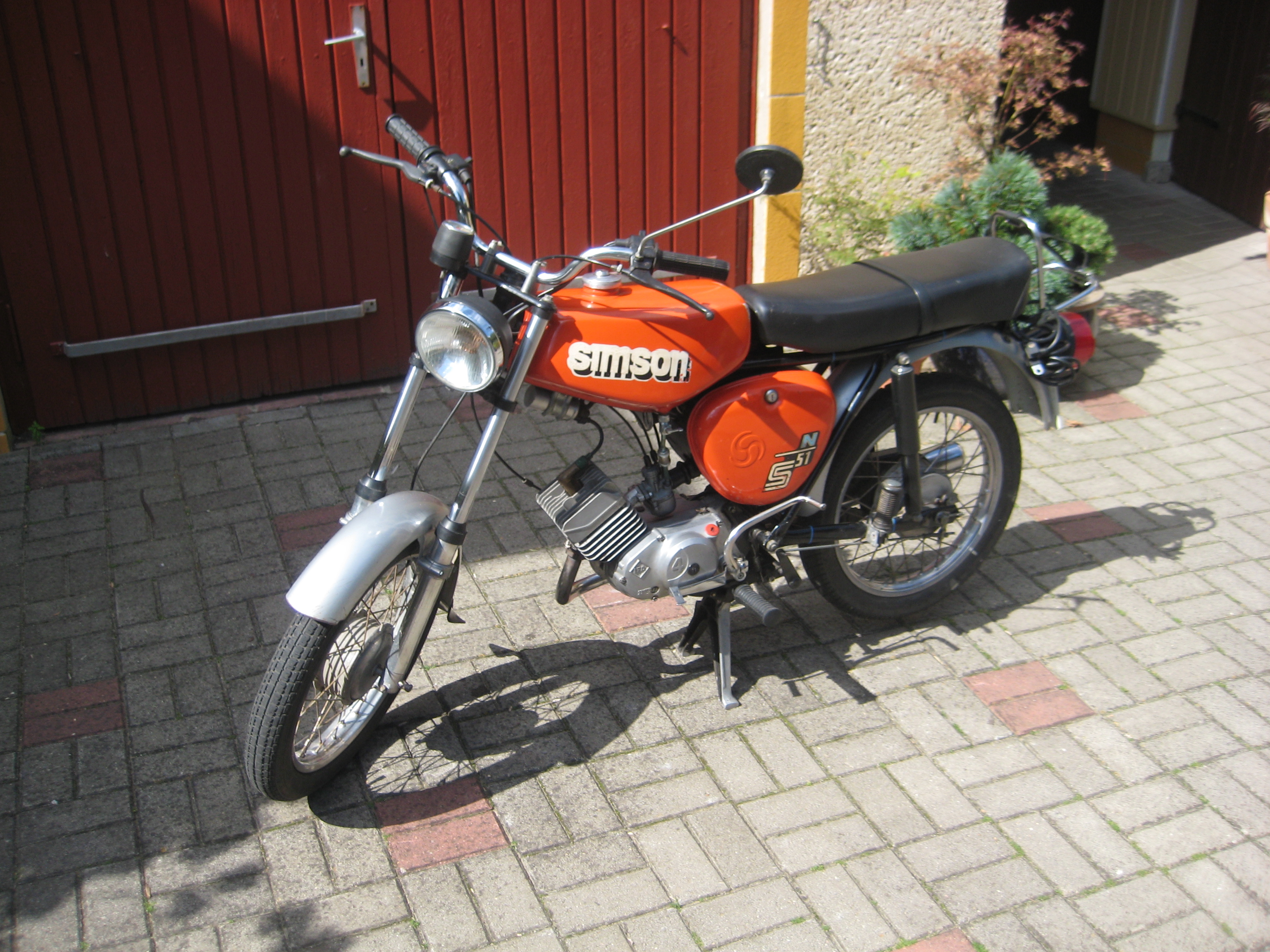
Simson S51

1980 · East Germany

Simson S51

The pride of Suhl, East Germany. Unlike Western 50cc bikes limited to 45 km/h, the Simson was legally allowed 60 km/h — a quirk of GDR law that still applies today. Robust, practical, and now a cherished icon of Ostalgie culture.

Geared motorcycle
Honda NSR 50

1986 · Japan

Honda NSR 50

A shrunken GP racer for the street. The NSR 50 borrowed its name from Honda's legendary Grand Prix machines. Liquid-cooled, reed-valve two-stroke, six speeds — this was serious hardware. Many future MotoGP champions cut their teeth on one.

Sport motorcycle

1990s

The Scooter Revolution

MBK Booster

1990 · France / Japan

MBK Booster / Yamaha BW's

The scooter that killed the moped overnight. Aggressive styling, 10-inch wheels, twist-and-go simplicity — the Booster defined the 1990s street scene. Every suburb in Europe buzzed with its two-stroke scream. A true cultural phenomenon.

Scooter
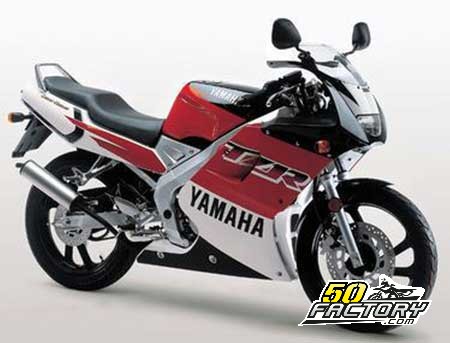
Yamaha TZR 50

1990 · Japan

Yamaha TZR 50

Yamaha's race-replica 50 brought genuine Grand Prix DNA to teenagers. Liquid-cooled two-stroke, full fairing, clip-on handlebars and a powerband that hit like a sledgehammer. The TZR was the dream machine — raw, fast, and unapologetically racing.

Sport motorcycle
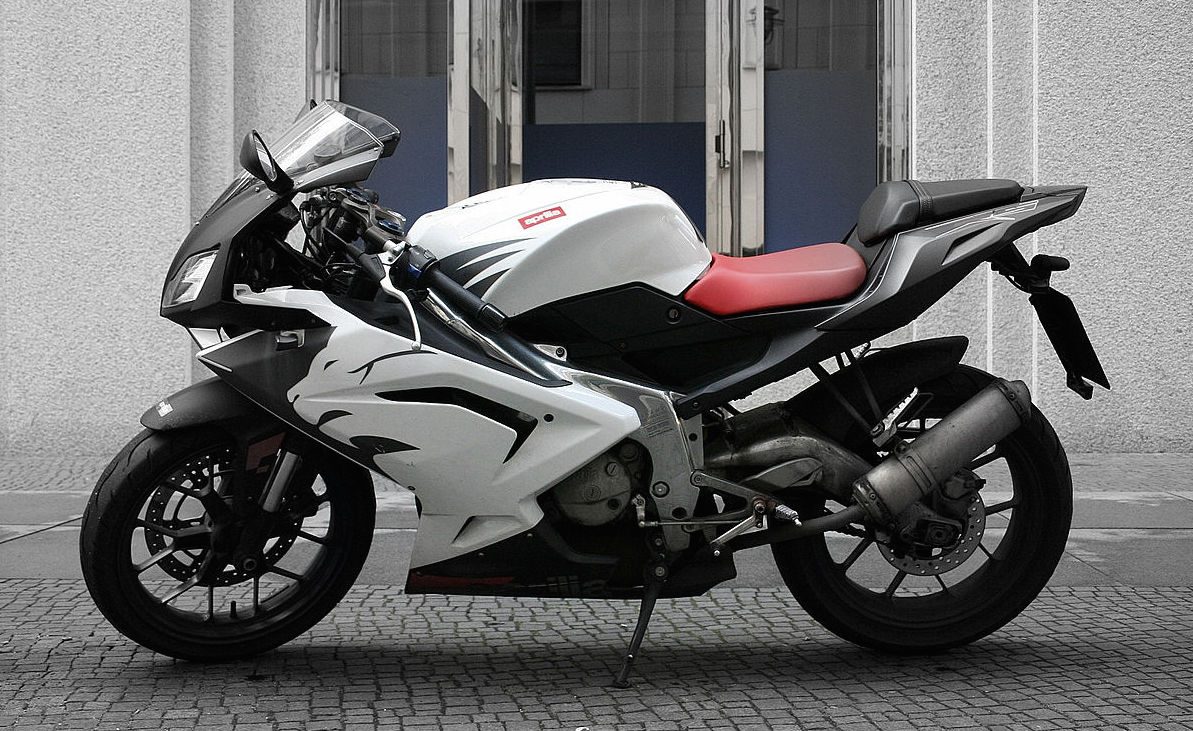
Aprilia RS 50

1992 · Italy

Aprilia RS 50

A miniature superbike, no compromises. Full fairing, clip-on handlebars, 6-speed gearbox — the RS 50 looked like it belonged on a Grand Prix grid. It launched countless racing careers and became the ultimate dream for every 16-year-old petrolhead.

Sport motorcycle
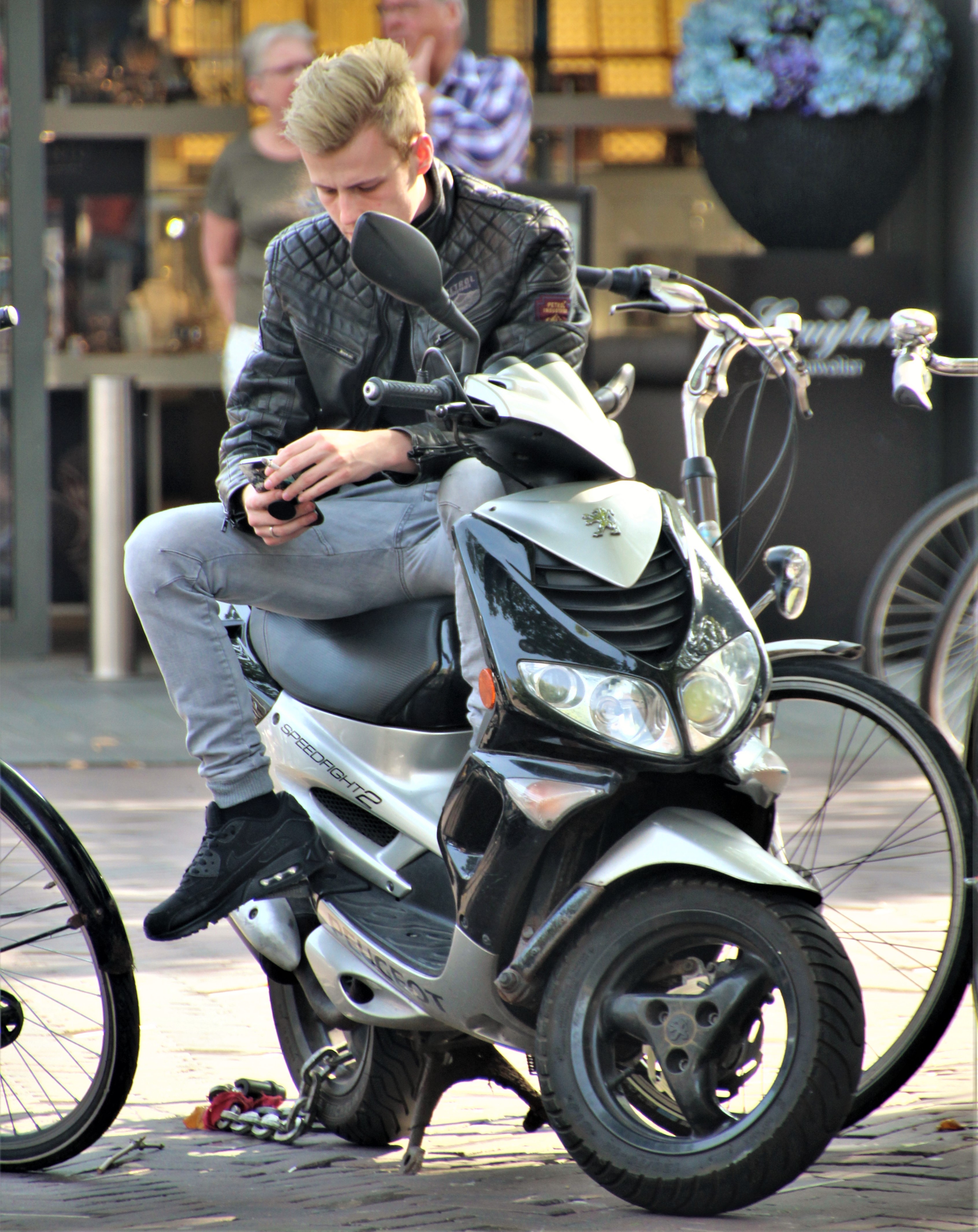
Peugeot Speedfight

1997 · France

Peugeot Speedfight

The sporty scooter that proved you don't need gears to have fun. Sharp bodywork, liquid-cooled engine, disc brakes — the Speedfight brought genuine performance to the scooter world and outsold everything in its class. Still in production today.

Sport scooter
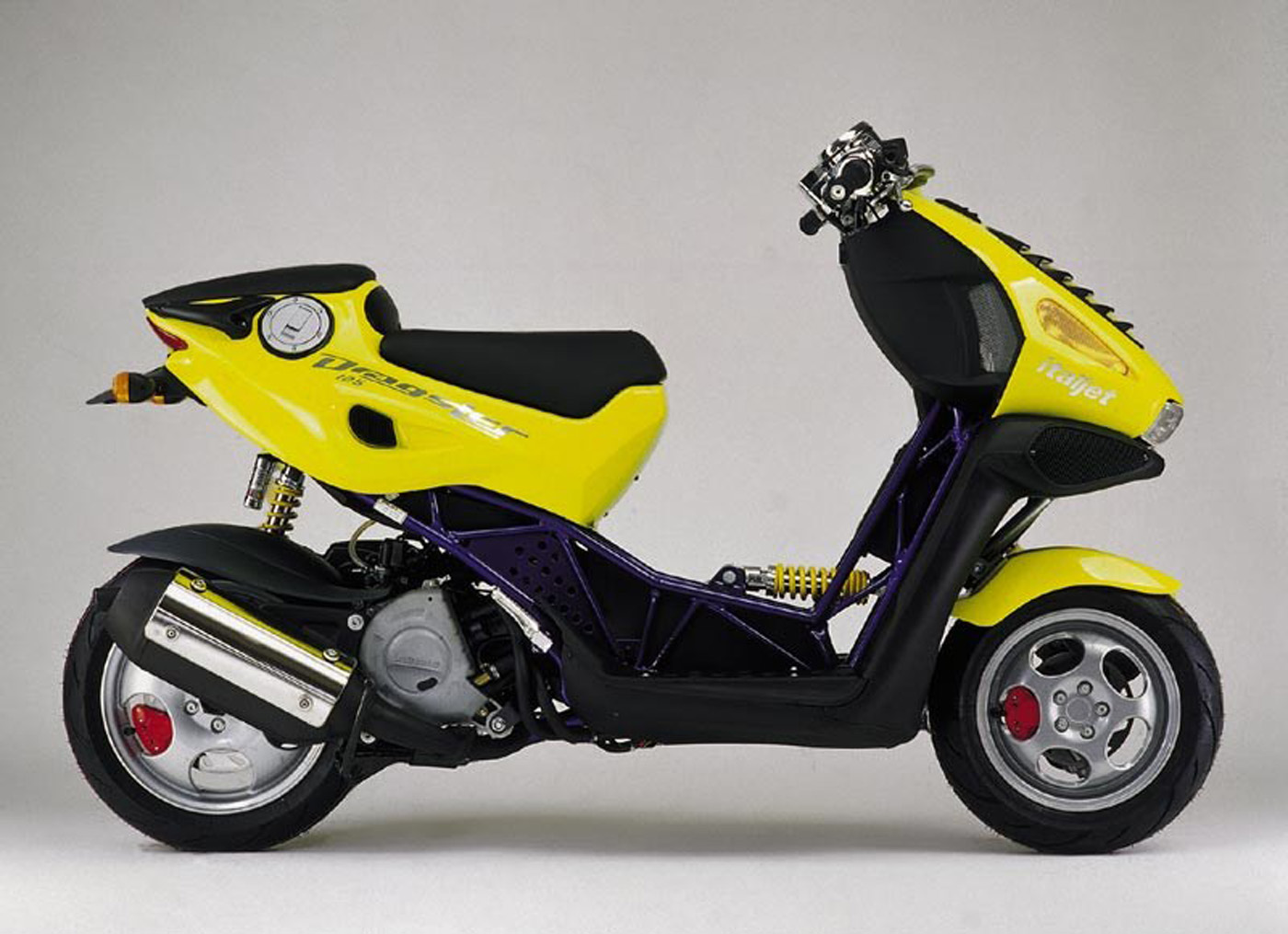
Italjet Dragster 50

1998 · Italy

Italjet Dragster 50

The wildest 50cc scooter ever built. Exposed trellis frame, hub-center steering, upside-down forks — the Dragster looked like nothing else on the road. Italian design excess at its absolute finest. Relaunched in 2020 because icons never truly die.

Sport scooter
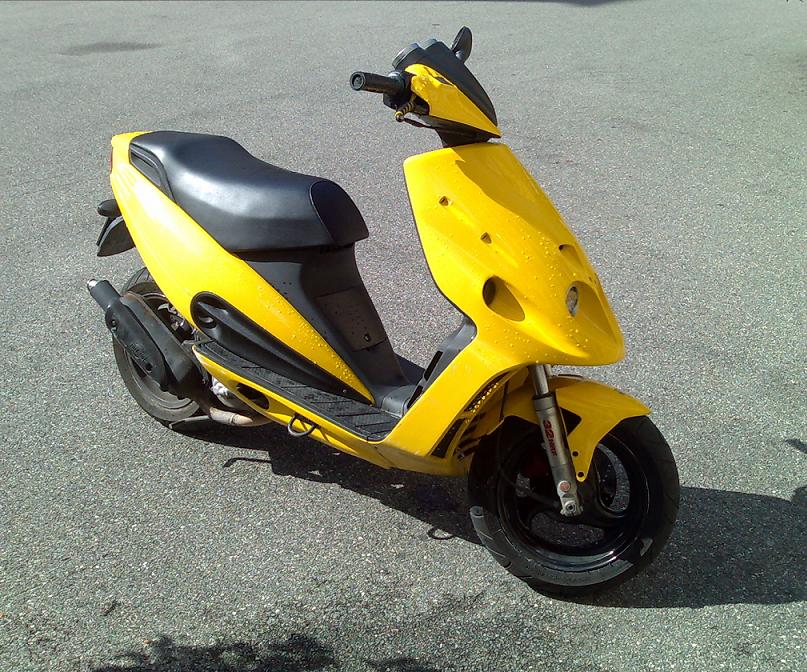
Malaguti Phantom F12

1998 · Italy

Malaguti Phantom F12

Italy's answer to the Speedfight. Aggressive twin-headlight face, a punchy Minarelli engine, and styling that screamed speed even standing still. The Phantom was the go-to for Italian teens who wanted sportiness with unmistakable Latin flair.

Sport scooter
Gilera Runner 50

1997 · Italy

Gilera Runner 50

The premium choice. While others played at being sporty, the Runner delivered: large wheels, a stiff chassis, and genuinely sharp handling. It was the scooter for riders who actually cared about cornering, not just straight-line posing.

Scooter
Piaggio Zip 50

1992 · Italy

Piaggio Zip 50

Three decades of production and still going strong. The Zip is the Swiss Army knife of scooters — compact, agile, affordable. Generations of European teenagers have started on a Zip, and the tuning scene around it is legendary.

Urban scooter
Yamaha Aerox 50

1997 · Japan

Yamaha Aerox 50

Yamaha's sporty scooter proved the Japanese could compete with Italian style. Sharp R-series inspired design, liquid cooling, and a Minarelli engine that tuners know inside out. The Aerox has survived every generation because it simply works.

Sport scooter
Piaggio Liberty 50

1997 · Italy

Piaggio Liberty 50

Piaggio's high-wheel city scooter. The 16-inch front wheel gives stability that small-wheeled scooters can only dream of. Constantly updated over 25+ years of production, the Liberty remains a reference in urban mobility.

High-wheel scooter

2000s

Supermotards & Enduro

Derbi Senda 50 SM

2000s · Spain

Derbi Senda 50 SM

The supermotard that ruled the streets. Upside-down forks, fat rear tire, and an engine begging to be tuned. The Senda turned city streets into racetracks and made the supermoto craze accessible from age 14. A rite of passage.

Supermotard
Derbi GPR 50 R

2000s · Spain

Derbi GPR 50 R

Derbi's faired sportbike carried the legacy of the brand's 50cc Grand Prix dominance. Full race replica bodywork, aggressive riding position, and a chassis that punched well above its displacement. The Aprilia RS 50's fiercest rival.

Sport motorcycle
Beta RR 50 Enduro

2000s · Italy

Beta RR 50 Enduro

Italian enduro heritage in 50cc form. The Beta RR gave young riders a real off-road weapon with proper long-travel suspension, knobby tires and a bulletproof Minarelli engine. Where the tarmac ended, the fun was just beginning.

Enduro
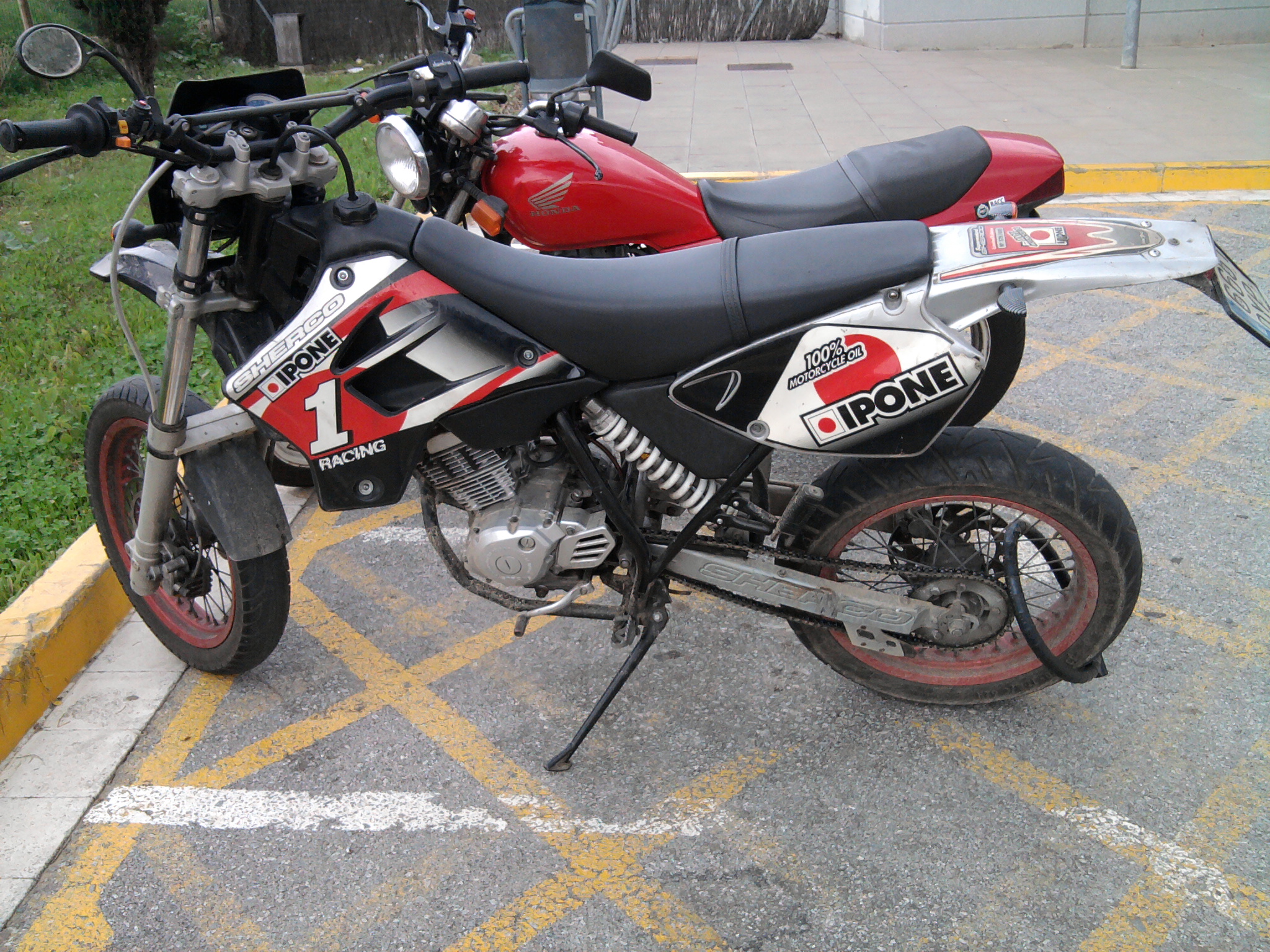
Sherco 50 SM

2000s · France

Sherco 50 SM

The French supermotard specialist. Sherco carved a niche with high-quality 50cc supermotards featuring premium suspension, sharp chassis and competitive engines. A serious alternative to the Spanish and Italian players.

Supermotard
Yamaha DT 50 X

2000s · Japan

Yamaha DT 50 X

Yamaha's dual-sport 50cc carried the DT legacy into the modern era. Supermotard styling, long-travel suspension and the renowned Minarelli engine. A versatile machine equally at home on tarmac and dirt tracks.

Supermotard
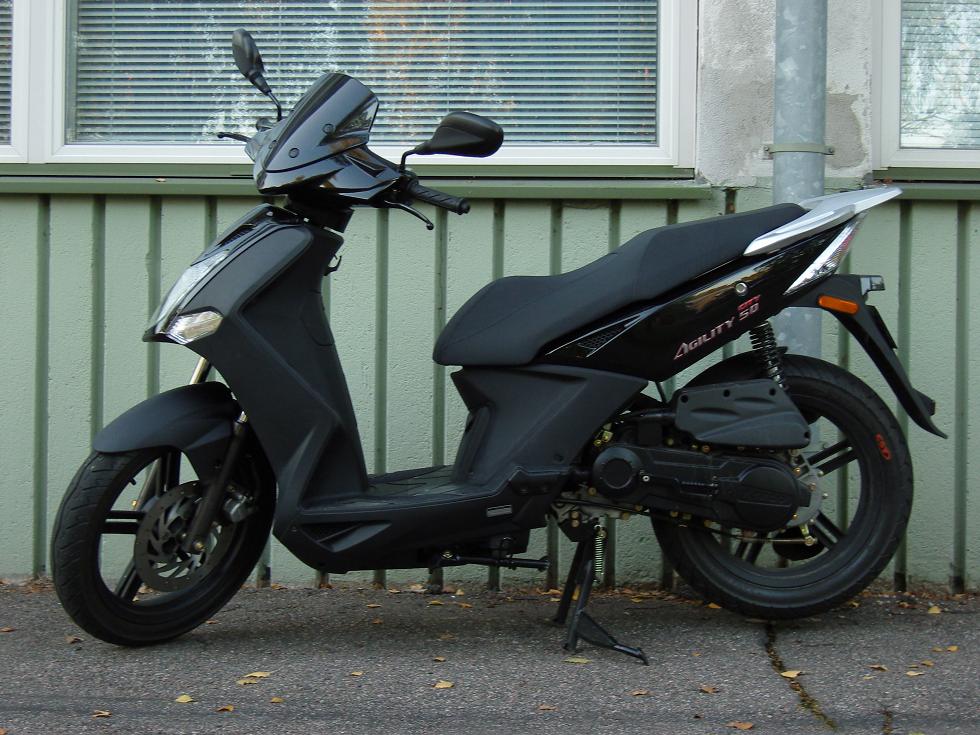
Kymco Agility 50

2005 · Taiwan

Kymco Agility 50

Taiwan's best-selling export to Europe. The Agility offers big-wheel stability, generous storage and bulletproof reliability at a price that undercuts the competition. The smart choice that millions of commuters have made.

Urban scooter

2010s — Today

Neo-Retro, Modern Scooters & Electric

Honda Vision 50

2011 · Japan

Honda Vision 50

The commuter king. Honda's Vision is the best-selling 50cc scooter in Europe — frugal, reliable and practical. Fuel injection, idle-stop system and a massive underseat compartment. Not exciting, but absolutely unbeatable for daily use.

Commuter scooter
SYM Fiddle 50

2010s · Taiwan

SYM Fiddle 50

Retro styling meets Taiwanese value. The Fiddle offers Vespa-like looks at half the price, with modern fuel injection and solid build quality. SYM has quietly become one of Europe's most popular 50cc brands.

Retro scooter
Vespa Primavera 50

2013 · Italy

Vespa Primavera 50

The Vespa legend reborn for the modern era. Euro 5 compliant, fuel-injected, and as elegant as ever. The Primavera proves that after 75+ years, nobody does scooter style quite like Piaggio. Still the ultimate city companion.

Scooter
Peugeot Django 50

2014 · France

Peugeot Django 50

Peugeot's retro-chic answer to the Vespa. Named after Django Reinhardt, it blends 1950s neo-retro styling with modern tech — LED lights, USB charging, Euro 5 engine. Proof that French scooters still have serious panache.

Retro scooter
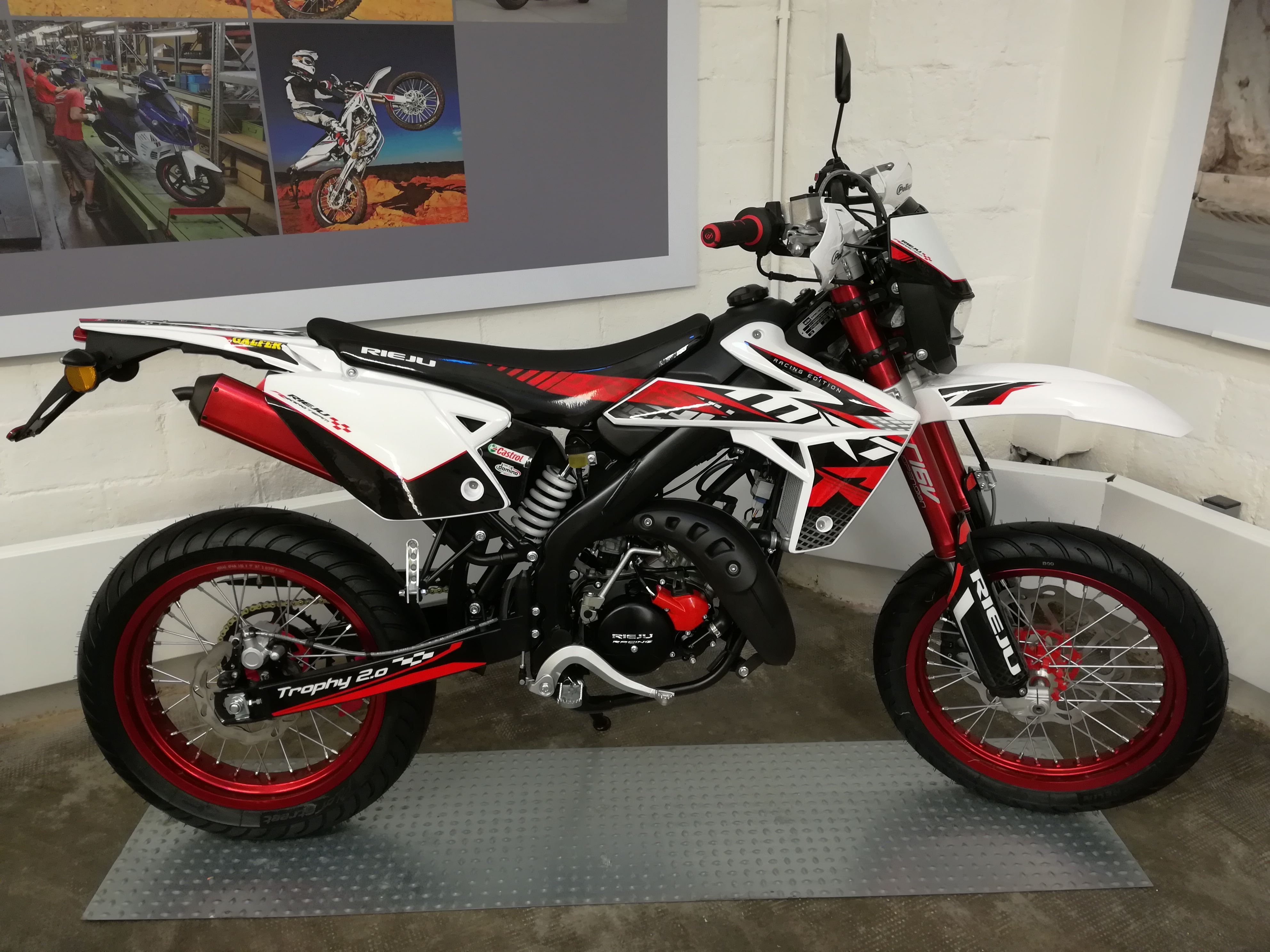
Rieju MRT 50 SM

2017 · Spain

Rieju MRT 50 SM

Spain's modern take on the 50cc supermotard. Sharp design, competitive pricing, and a proper chassis with quality components. The Rieju picked up where Derbi left off, giving a new generation their first taste of knee-down sliding.

Supermotard
Fantic Caballero 50

2017 · Italy

Fantic Caballero 50

Fantic's comeback bike. The Caballero brings Italian flat-track style to the 50cc class with a scrambler look, spoked wheels and a punchy Euro 5 engine. A breath of fresh air in a segment dominated by Asian scooters.

Scrambler
Orcal Astor 50

2020s · France

Orcal Astor 50

The French neo-retro surprise. Orcal brought cafe racer style to the 50cc class at an accessible price point — chrome tank, round headlight, brown seat. Proof that you don't need a big engine to look like a million bucks.

Neo-retro
Super Soco electric scooter

2020s · China

Super Soco / NIU

Chinese manufacturers rewrote the rules with stylish electric scooters — equivalent power to a 50cc, zero emissions, smartphone connectivity, and swappable batteries. Super Soco and NIU are now a common sight in every European city.

Electric scooter
Yamaha NEO's electric

2024 · Japan

Yamaha NEO's Electric

Yamaha's first mass-market electric scooter for Europe. The NEO's brings Japanese reliability to the electric 50cc class with a removable battery, clean design and the trust of a brand that's been building scooters for 60 years. The future has a familiar name.

Electric scooter
Piaggio 1 Active electric

2024 · Italy

Piaggio 1 Active

Piaggio — creators of the Vespa — go electric with the Piaggio 1. Compact, lightweight, with a portable battery you charge at home like a laptop. Italian design meets zero-emission urban mobility. The heritage brand shows it can evolve.

Electric scooter
Honda EM1 e: electric

2025 · Japan

Honda EM1 e:

Honda's entry into the European electric 50cc market. Swappable battery system (Honda Mobile Power Pack), hub motor, and the backing of the world's largest motorcycle manufacturer. When Honda commits to electric, the industry listens. The 50cc revolution is now silent.

Electric scooter

The Licence-Friendly Legends

The 125cc class — where real motorcycling begins. From two-stroke screamers to modern naked bikes, these machines are the gateway drug.

1990s — Classics

The Two-Stroke Glory Days

Cagiva Mito 125

1990 · Italy

Cagiva Mito 125

Designed by Massimo Tamburini (the man behind the Ducati 916), the Mito was a miniature Ducati for the 125cc class. Two-stroke, 34 hp, and drop-dead gorgeous. Many consider it the greatest 125 ever built.

Sport · 2T · 34 hp
Yamaha TZR 125

1987 · Japan

Yamaha TZR 125

Pure two-stroke racing technology for the street. The TZR 125 was Yamaha's GP-derived weapon — YPVS power valve, liquid cooling, Deltabox frame. In the hands of a skilled rider, it could embarrass bikes twice its displacement. A legend of the two-stroke era.
Sport · 2T · 29 hp
Aprilia RS 125

1992 · Italy

Aprilia RS 125

The GP-bred 125 that launched a thousand racing careers. Valentino Rossi, Jorge Lorenzo, Casey Stoner — they all started on an RS 125. Rotax-powered two-stroke screamer, now reborn as a modern four-stroke for the Euro 5 era.

Sport · 15 hp (4T)

2000s

The Four-Stroke Transition

Honda CBR 125 R

2004 · Japan

Honda CBR 125 R

Honda's answer to the end of the two-stroke era. The CBR125R proved a four-stroke 125 could still be exciting — full fairing, sporty ergonomics, and legendary Honda reliability. Europe's best-selling 125cc sportbike for years.

Sport · 13 hp
Yamaha YBR 125

2005 · Japan

Yamaha YBR 125

The sensible choice millions of riders made. The YBR 125 wasn't flashy, but it was cheap, comfortable and indestructible. Used as a commuter, courier bike and first machine across the world. A true workhorse of the 125cc class.

Commuter · 10 hp
Honda Varadero 125

2001 · Japan

Honda Varadero 125

Adventure touring on an A1 licence. The Varadero was a downsized Africa Twin — V-twin engine, protective fairing, and genuine long-distance comfort. It showed that 125cc doesn't have to mean short trips around town.

Adventure · 15 hp
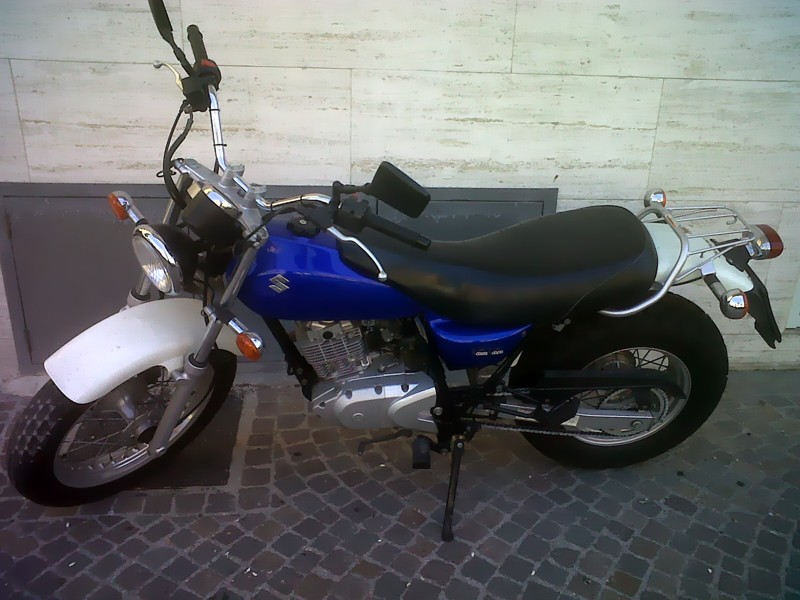
Suzuki Van Van 125

2003 · Japan

Suzuki Van Van 125

The fat-tired retro oddball that everyone secretly loved. The Van Van's beach-cruiser vibe, wide rear tire and laid-back character made it the most stylish commuter on the road. A cult classic with a personality bigger than its engine.

Retro scrambler · 10 hp
Yamaha TW 125

1999 · Japan

Yamaha TW 125

Balloon tires, stripped-down simplicity, and a counter-culture following in Japan and France. The TW became the darling of the custom scene — low, fat, and effortlessly cool. It proved that less really is more in motorcycle design.

Fat-tire trail · 10 hp
Derbi Mulhacen 125

2006 · Spain

Derbi Mulhacen 125

Derbi's scrambler-style 125 brought Spanish character to the four-stroke transition. Designed in Barcelona, the Mulhacen offered a more characterful alternative to the Japanese commuters. A bit rough around the edges — but that was the charm.

Scrambler · 15 hp
Aprilia RS4 125

2011 · Italy

Aprilia RS4 125

The spiritual successor to the two-stroke RS 125, now with a four-stroke heart. The RS4 kept the full-race look — twin headlights, aggressive fairing, clip-ons — while meeting modern emission standards. Italian passion refused to die quietly.

Sport · 15 hp

2014 — Today

Modern Nakeds & Sport

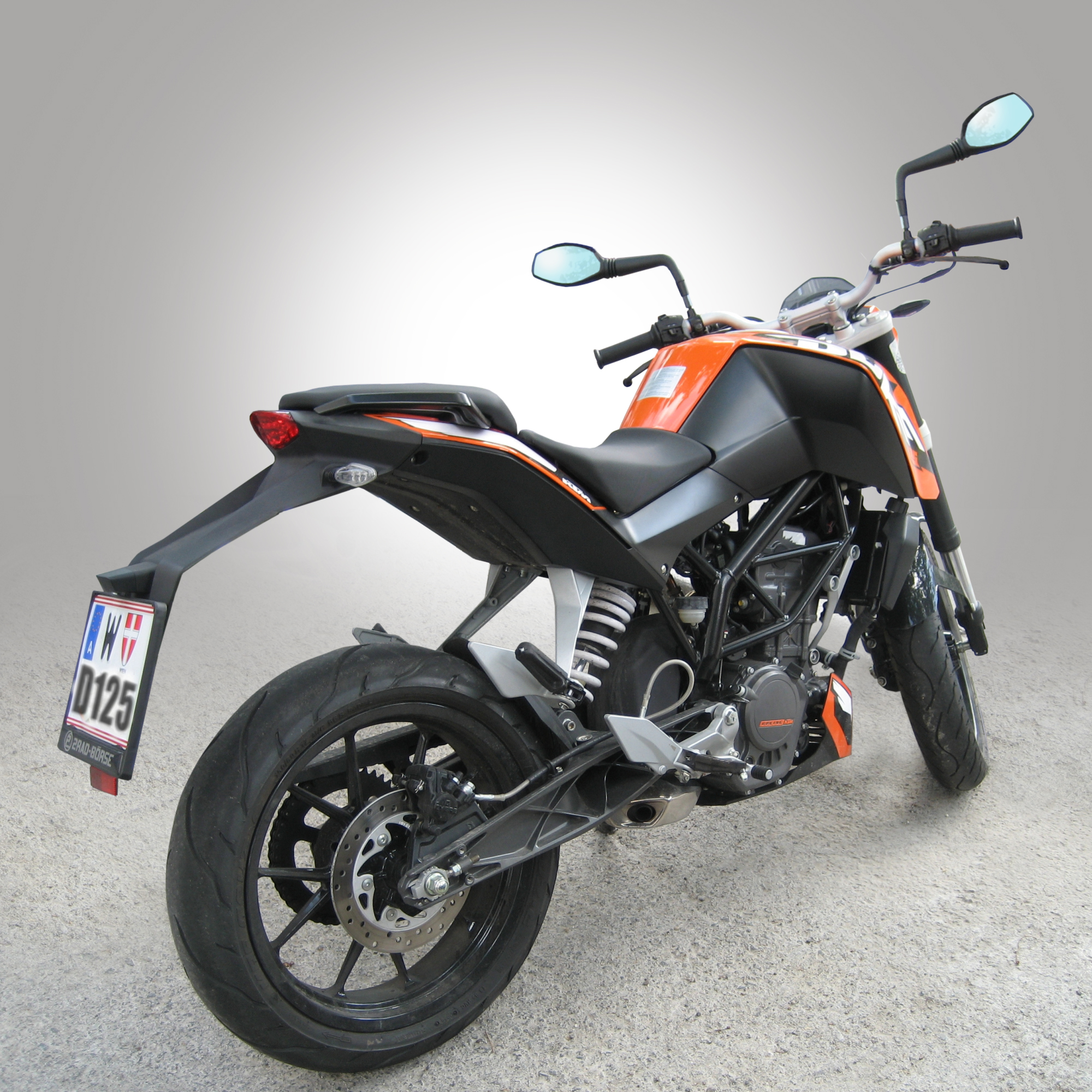
KTM Duke 125

2011 · Austria

KTM 125 Duke

KTM brought big-bike attitude to the A1 licence class. The Duke 125 has the same sharp chassis and aggressive styling as its 390 sibling — just with a learner-legal single-cylinder. It made every other 125 look boring overnight.

Naked · 15 hp
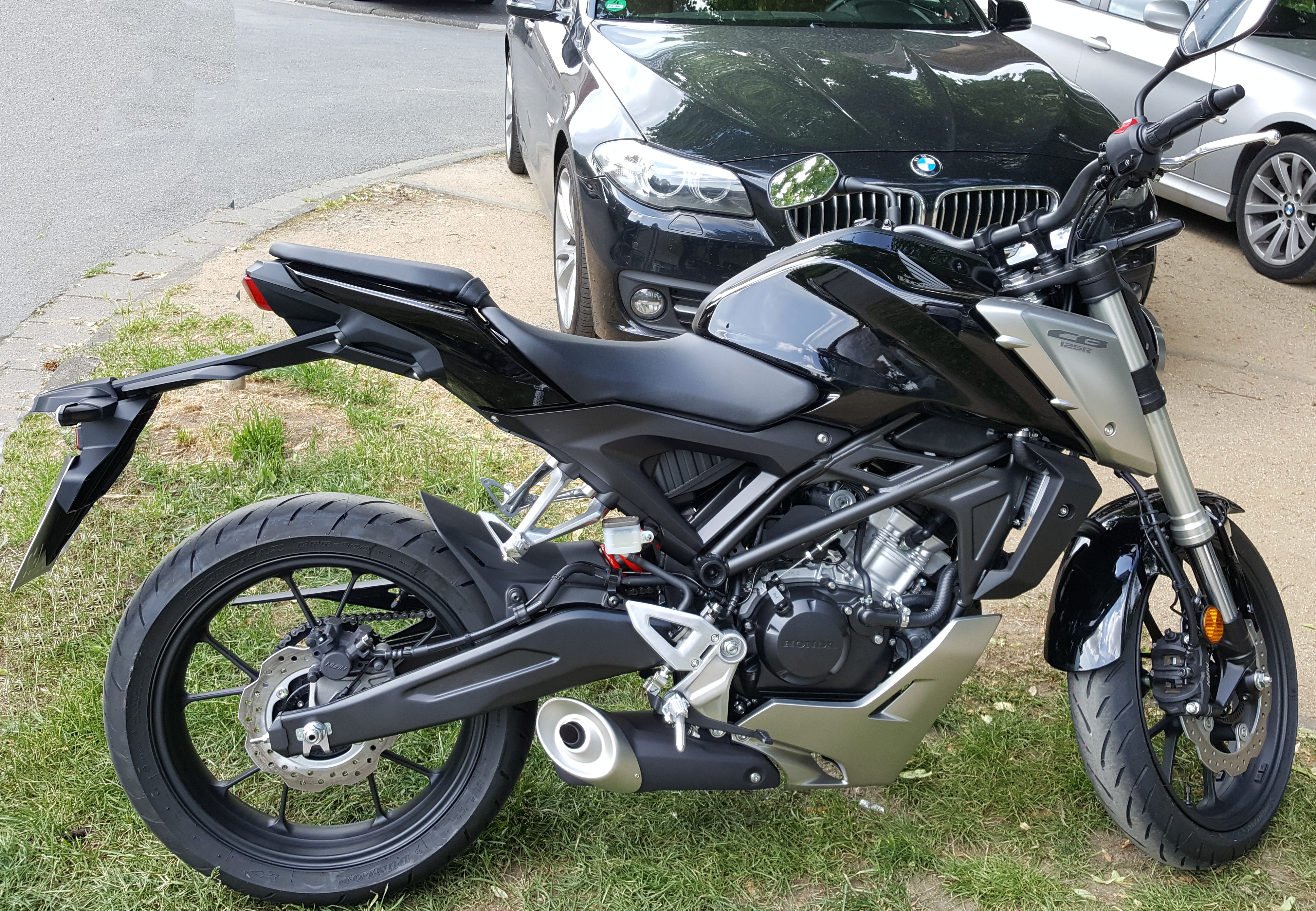
Honda CB125R

2018 · Japan

Honda CB125R

Honda's neo-sport cafe racer for the 125cc class. USD forks, radial-mount brakes, LED everything — the CB125R punches way above its weight in build quality. It looks and feels like a premium motorcycle that happens to be 125cc.

Neo-sport cafe · 15 hp
Yamaha MT-125

2014 · Japan

Yamaha MT-125

Yamaha's "Dark Side of Japan" philosophy scaled down to 125cc. The MT-125 brings the aggressive face and naked roadster attitude of the MT family to new riders. A massive sales success across Europe and a proper gateway to the MT range.

Naked · 15 hp
Yamaha YZF-R125

2008 · Japan

Yamaha YZF-R125

Full-size supersport looks in a 125cc package. The R125 brought genuine R-series DNA to the learner class — deltabox frame, aggressive bodywork, and handling that embarrasses bigger bikes in the twisties. The best-selling sport 125 in Europe.

Supersport · 15 hp
KTM RC 125

2014 · Austria

KTM RC 125

KTM's faired sportbike gives the R125 a serious Austrian rival. Trellis frame, WP suspension, and MotoGP-inspired bodywork. The RC 125 is for riders who want race-track focus from day one of their licence.

Supersport · 15 hp
Suzuki GSX-S125

2017 · Japan

Suzuki GSX-S125

Suzuki's street-fighter 125 inherits the GSX-S family's aggressive stance. Low seat height, lightweight, and one of the most rev-happy 125cc engines on the market. A dark horse that deserves more attention than it gets.

Naked · 15 hp
Aprilia Tuono 125

2017 · Italy

Aprilia Tuono 125

The Tuono name carries weight in the supernaked world, and Aprilia brought that DNA to the 125 class. Aggressive triple-headlight face, trellis frame, and Aprilia's racing pedigree. Italian fire in a learner-legal package.

Naked · 15 hp
Benelli BN 125

2018 · Italy / China

Benelli BN 125

The most affordable 125cc naked on the market. Benelli (now Chinese-owned) delivers a full-size motorcycle experience at a fraction of the price. No frills, no pretension — just honest, accessible motorcycling for everyone.

Naked · 11 hp

Neo-Retro & Fun

Style Over Speed

Honda Dax ST125

2022 · Japan

Honda Dax ST125

The Dax is back. Honda revived its iconic T-bone frame mini bike for a new generation — fuel injected, LED lit, and dripping with retro charm. Sold out everywhere on launch. The spirit of the original 1969 ST50 lives on, bigger and better.

Mini bike · 9.2 hp
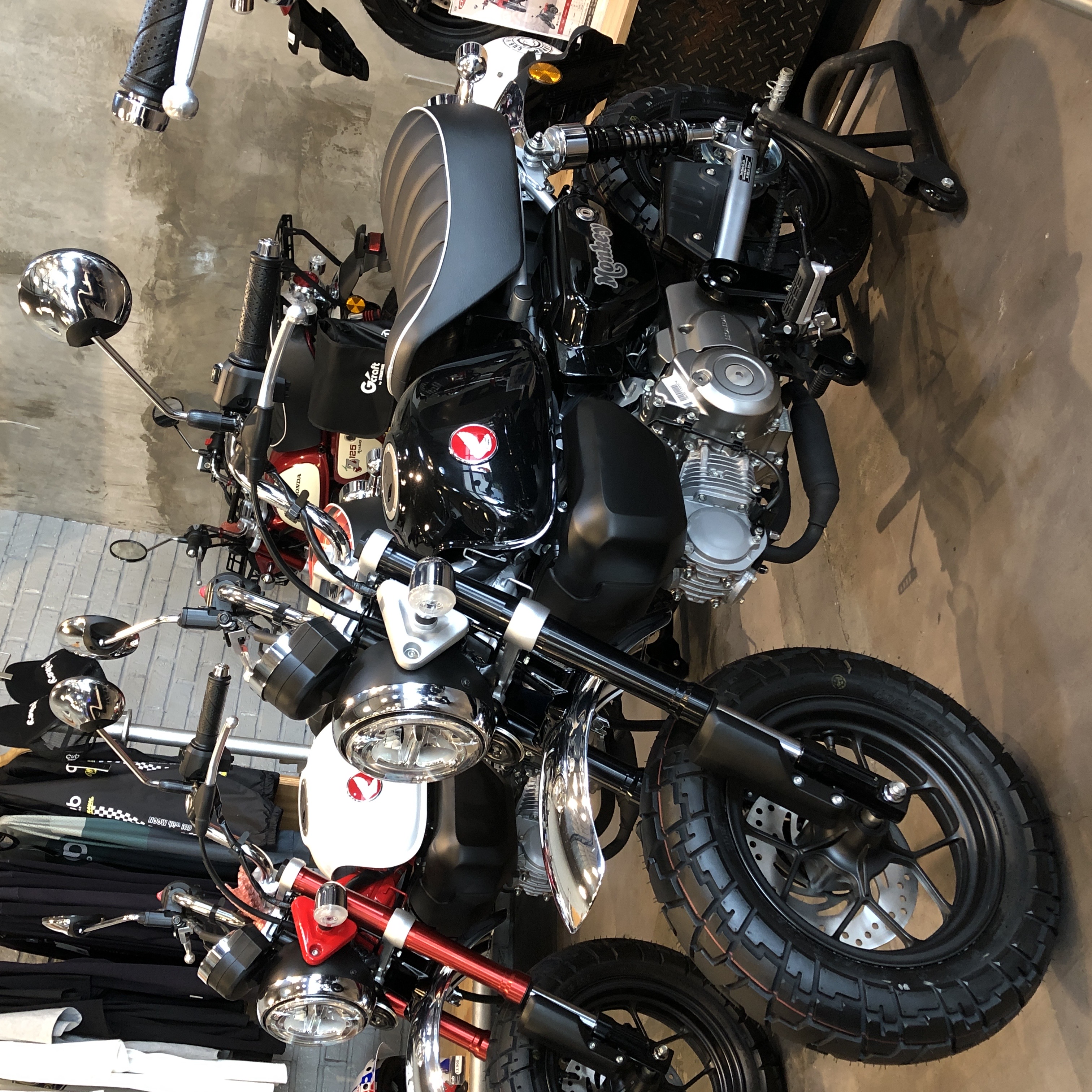
Honda Monkey 125

2018 · Japan

Honda Monkey 125

The original fun bike, reborn. The Monkey 125 keeps the playful spirit of the Z50 with modern tech — fuel injection, ABS, LED lights. Tiny wheels, massive smile factor. The bike that proves motorcycling is supposed to be fun.

Mini bike · 9.2 hp
Honda MSX 125 Grom

2013 · Japan

Honda MSX 125 / Grom

The Grom created an entirely new category: the urban mini-moto. Supermotard style, 12-inch wheels, and a massive aftermarket scene. Stunt riders, commuters, and customizers all fell in love. The most fun per cubic centimeter.

Mini moto · 10 hp
Yamaha XSR 125

2021 · Japan

Yamaha XSR 125

Yamaha's heritage line meets the 125cc class. The XSR 125 blends 1970s cafe racer aesthetics with modern MT-125 underpinnings. Brushed aluminum tank, round headlight, and genuine character — the coolest way to start riding.

Neo-retro · 15 hp
Fantic Caballero 125

2020 · Italy

Fantic Caballero 125

Italian flat-track style in 125cc form. Fantic's Caballero brings spoked wheels, a scrambler stance, and unmistakable character to the A1 class. Available in Flat Track, Rally, and Scrambler versions — pick your adventure.

Scrambler · 15 hp
Honda CB125F

2015 · Japan

Honda CB125F

The world's best-selling 125cc commuter. No flash, no pretension — just Honda reliability at an unbeatable price. 130+ mpg fuel economy, rock-solid build quality, and millions sold across the globe. The working rider's best friend.

Commuter · 11 hp

The Power Race

140 years of engineering distilled into two charts

Horsepower (hp) through the decades

1885
0.5 hp
1920
18 hp
1945
23 hp
1959
46 hp
1972
67 hp
1985
100 hp
1994
150 hp
2015
210 hp
2026
230+ hp

Top speed (km/h) through the decades

1885
12 km/h
1920
95 km/h
1959
175 km/h
1972
200 km/h
1985
250 km/h
1999
312 km/h
2015
330 km/h
2026
400+ km/h

Did You Know?

The untold stories that built the legend of the motorcycle

The 1885 Reitwagen had wooden wheels and two small training wheels on the sides — like a kid's bicycle. Its single 264 cc cylinder produced the staggering power of... 0.5 horsepower.

The Tourist Trophy (Isle of Man) is the oldest and most dangerous motorcycle race in the world. Since 1907, riders have averaged over 300 km/h on public roads lined with stone walls.

The Triumph Bonneville was named after Johnny Allen's speed record at the Bonneville Salt Flats in 1956 on a Triumph Thunderbird. The salt desert became a legendary name.

Electric speed record: 408 km/h by the Voxan Wattman, piloted by former MotoGP champion Max Biaggi in 2021. Silence at 400 km/h actually exists.

The term "superbike" was coined by the American press to describe the Honda CB750 in 1969. Before it, no production motorcycle offered an inline-four, disc brake AND electric starter.

The first Paris-Dakar (1979): 182 starters, 10,000 km of desert, and only 74 finishers. Cyril Neveu won the motorcycle class on a Yamaha XT500 — a trail bike, not a rally machine.

Share Your Thoughts

Join the conversation — what's your favorite era, bike, or memory on two wheels?

Loading comments...